



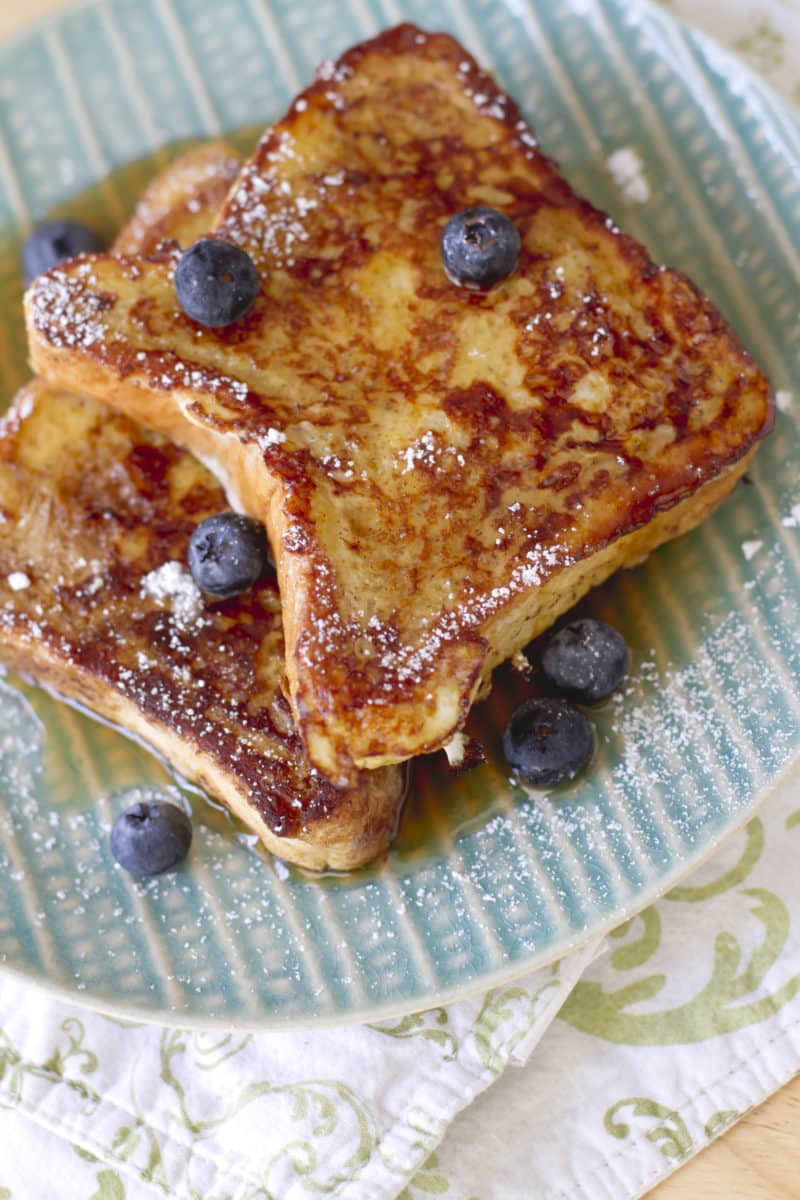


French toast is a sweet, delicious breakfast food. It is made by dipping pieces of bread in egg and milk, and frying the pieces in oil or butter until they turn golden brown. I prefer using challah bread to make French toast, because it is very soft, but you can use brioche, Pullman loaf, or sourdough bread to make it. My grandparents even use baguette, but since it is harder than the other types of bread, they tend to soak the baguette pieces overnight so they get soft enough. I also like to put maple syrup and chopped fruit on my French toast.
According to Wikipedia, the earliest known reference to French toast dates back to the fourth or fifth century, in a collection of Latin recipes called the Apicius. The heading for the recipe was titled “Aliter Dulcia,” which means “another sweet dish.”
French toast was widely known in medieval Europe. The usual French name for this dish is “pain perdu,” which means “lost bread.” It is called “lost bread” because making french toast is a way to be able to eat stale, or otherwise “lost” bread. In England, French toast can also be called “eggy bread,” “gypsy toast,” or “French-fried bread.” French toast has also been called Spanish toast and German toast. So why do we call it French toast? As The Breakfast Courier says, “Supposedly French immigrants to America popularized the dish, and the connotation stuck.”
French toast also is popular in Hong Kong, and it is made a little differently from how Americans make French toast–it is typically made as a sandwich, with a sweet filling, and topped with golden syrup, or sometimes honey.
So, as you can see, French toast has a long and rich history all over the world. I hope you enjoy this recipe! 
First published April 2016
