I’d wager that every country with a coastline has a dish comparable to a cataplana, the Portuguese seafood stew of that name. The South of France has its bouillabaisse, Italy (and San Francisco) their cioppino, Brazil its Moqueca de Piexe, Spain its Paella, the Netherlands its Waterzooi. South American, African and Asian countries all have their signature seafood melanges; far too many to list here. Like tagine, paella or even chowder, the dish’s name has evolved from the pot in which it is cooked.
I first encountered the cataplana on my first night in the Algarve, Portugal’s southern coast. In a restaurant in Lagos, we were served our cataplana in a steaming copper vessel, hinged so it can be opened for serving. While there are variations on fish stews and soups even within a given town, my contention has always been that these dishes originated with what was left in the fishermen’s nets, despite admonitions that a particular fish, mollusk or cephalopod is required to be “authentic.”
Some culinary purists insist that rascasse, a type of scorpionfish found in the Mediterranean, is necessary for a true bouillabaisse. But it’s hard to imagine that any fisherman worth his salt would refuse to sell his last rascasse (even if someone wanted to buy it) in order to add it to that night’s bouillabaisse. (Besides, they are venomous and extremely unattractive.)
In Lagos, Portugal, you can watch the fishermen unload their catch in the morning, buy it in the municipal market later that day, and dine on these treasures for dinner. I imagine this is true in numerous fishing ports around the world.
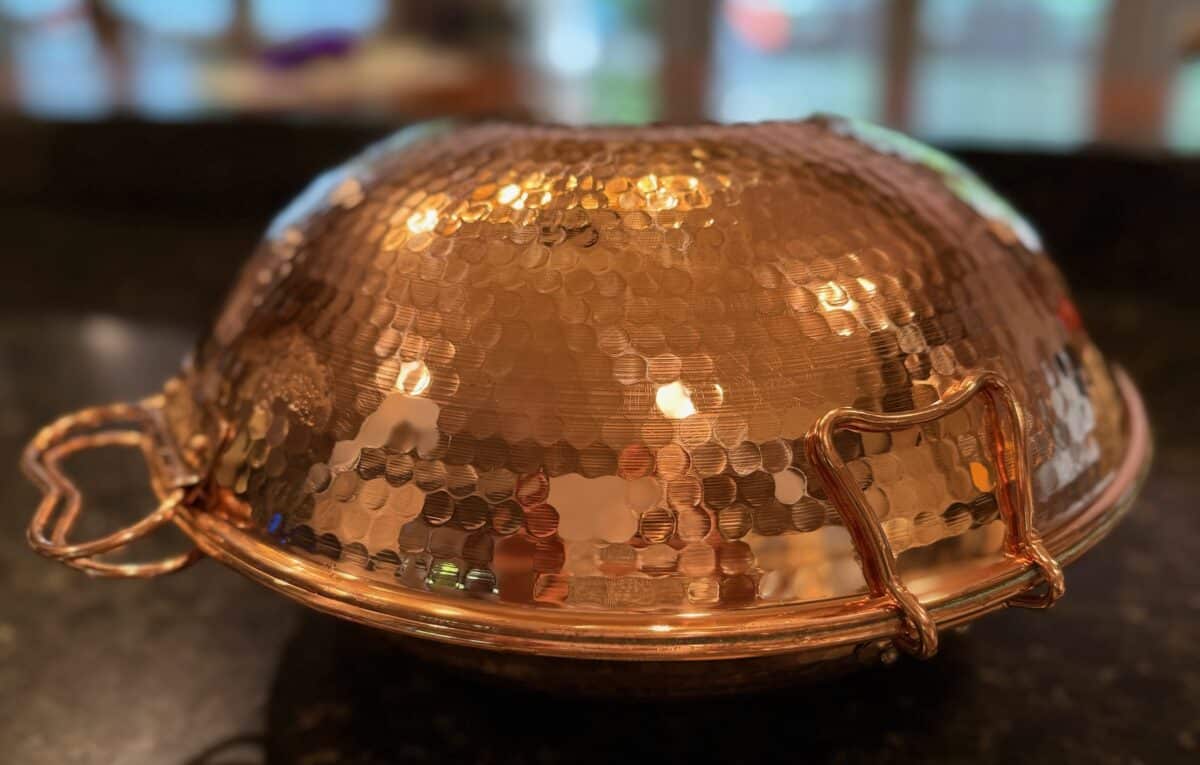
The origin of the cataplana is apparently not known, but most culinary historians seem to agree that it is a cousin of the North African tagine, and was likely crafted by skilled Moorish metal artisans when they ruled Portugal for some 500 years, from the 8th century to the 12th. As you can see from the photo it is a lovely bit of coppersmithing, copper having been valued for centuries for its even heat distribution properties. The architectural and cultural influence of the Moors is unmistakable in the Algarve, and north African craftspeople still can be found selling their wares at street markets.
The fact that the slightly flattened golf ball shape that defines it can be clamped shut makes it a precursor to the pressure cooker. The distinctive shape means it can steam ingredients together, melding flavor and aromas. Although I use olive oil when starting to sauté the ingredients, it doesn’t require too much, making it a healthy way to cook. It’s also a visual feast to open the cataplana at the table allowing your guests to breathe in the aroma, and choose their favorite frutta di mare.
View the recipe here:/recipes/classic-cataplana/
Classic Cataplana

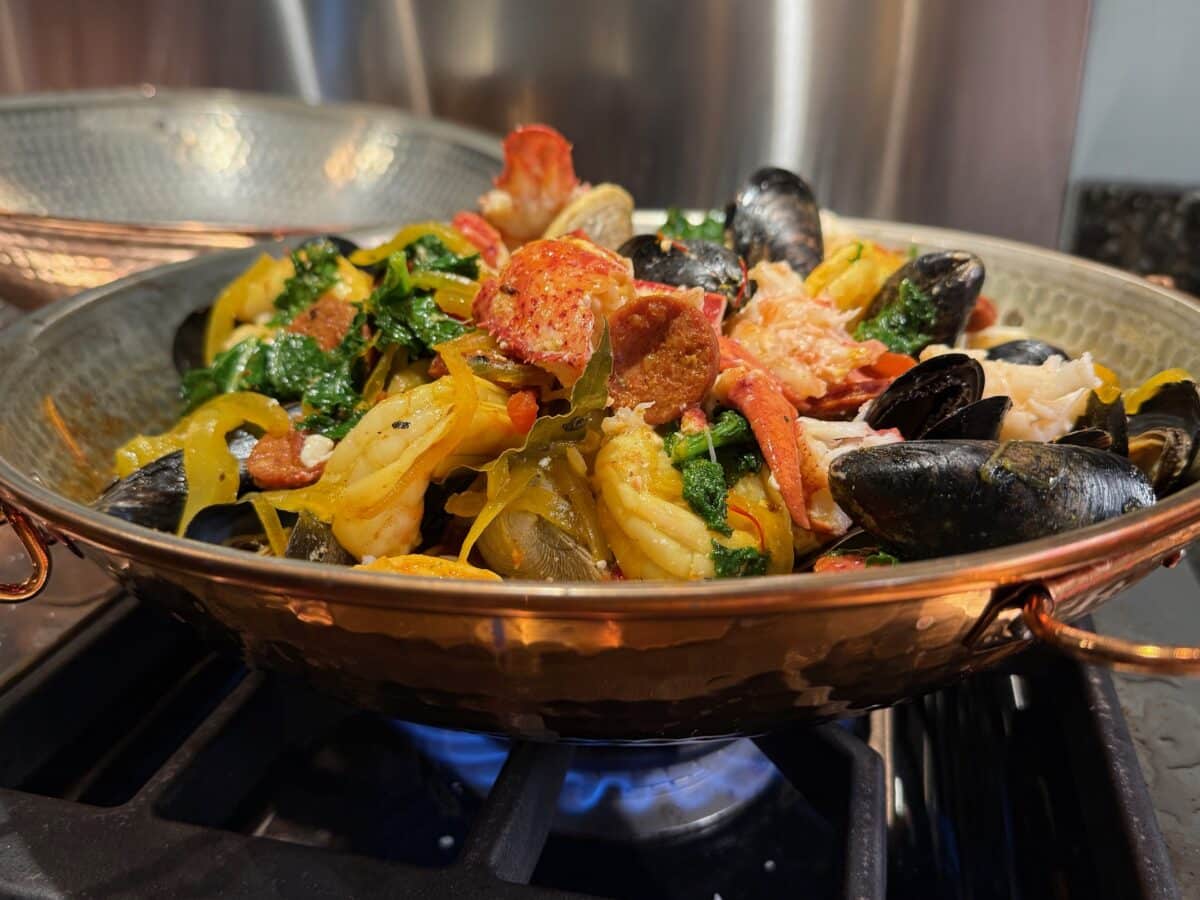
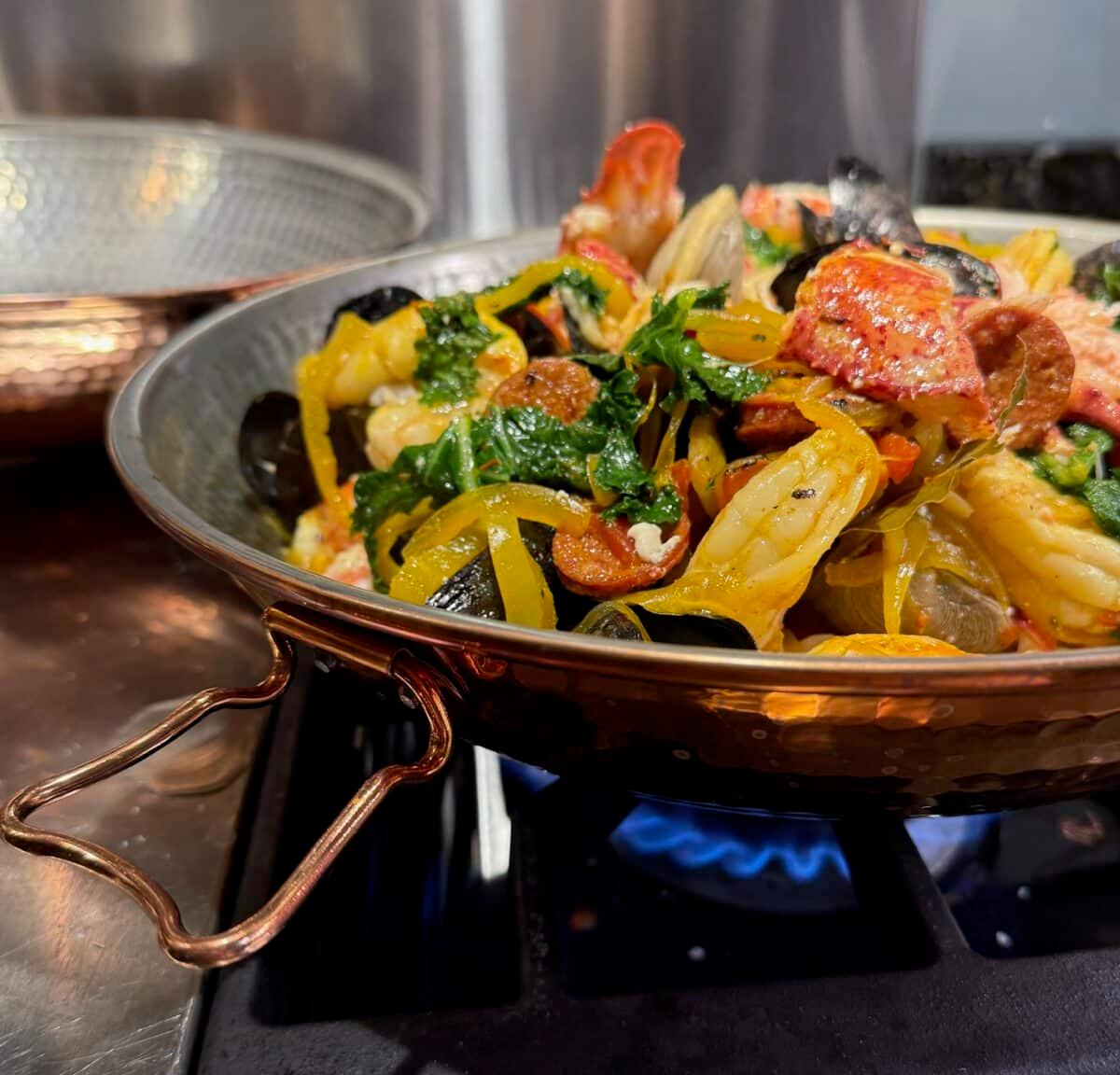
If you don’t have a cataplana (the cooking vessel, that is) for this classic cataplana recipe, a Dutch oven with a well-fitting lid will work well. The traditional pot is a conversation piece to be sure, but your food won’t suffer from using a more common pot. A classic cataplana recipe includes just linguica, clams and shrimp, but you can add anything in the bivalve/shellfish pantheon, calamari or mussels, as well as chunks of boneless pork.
Like so many soups and stews, this cries out for some good crusty bread. The Portuguese have a variety of wonderful breads and rolls, but any fresh loaf will do. Serve with chilled vino verde and a simple green salad.
Ingredients
- •12 littleneck clams, sorted and scrubbed*
- •454 grams (1 pound) fresh mussels
- •2 tablespoons extra-virgin olive oil, plus additonal for drizzling
- •227 grams (8 ounces) linguica (hot or mild), sliced or roughly chopped
- •4 cloves garlic, sliced thinly
- •1 yellow onion, halved and thinly sliced
- •2 Cubanelle or other sweet green peppers, thinly sliced
- •1 1/2 cups canned fire-roasted tomatoes
- •118 ml (1/2 cup) seafood or clam broth
- •60 ml (1/4 cup) dry white wine
- •1/2 teaspoon smoked paprika
- •12 shell-on extra-large raw shrimp, peeled except for the tails
- •1 pound fresh kale, large stems removed, cut crosswise into large ribbons
- •Meat from 1 large cooked lobster, in bite-sized pieces (optional)
* Be sure to use small hard shell clams as opposed to soft shell or steamer clams.


Preparation
- In a colander, rinse the clams and mussels under cold running water. Discard any that have already opened or have broken shells.
In a cataplana or Dutch oven, heat 2 tablespoons olive oil in pot until shimmering. Sauté linguica until it begins to render a bit of its fat. Add garlic, onions and peppers and saute until soft. Add the tomatoes, broth, and wine. Stir in smoked paprika and bring to a simmer.
Add the clams and simmer for 2-3 minutes. Add the shrimp and mussels and cover. Simmer for 5-7 minutes or until the clams and mussels have opened fully. Discard any that remain closed. Add the kale and lobster pieces, if using. Stir until the kale is just wilted and still bright green, about 30 seconds.
Using a spoon and tongs, ladle cataplana broth and seafood into individual soup plates or wide bowls. Drizzle each with olive oil and serve hot.