


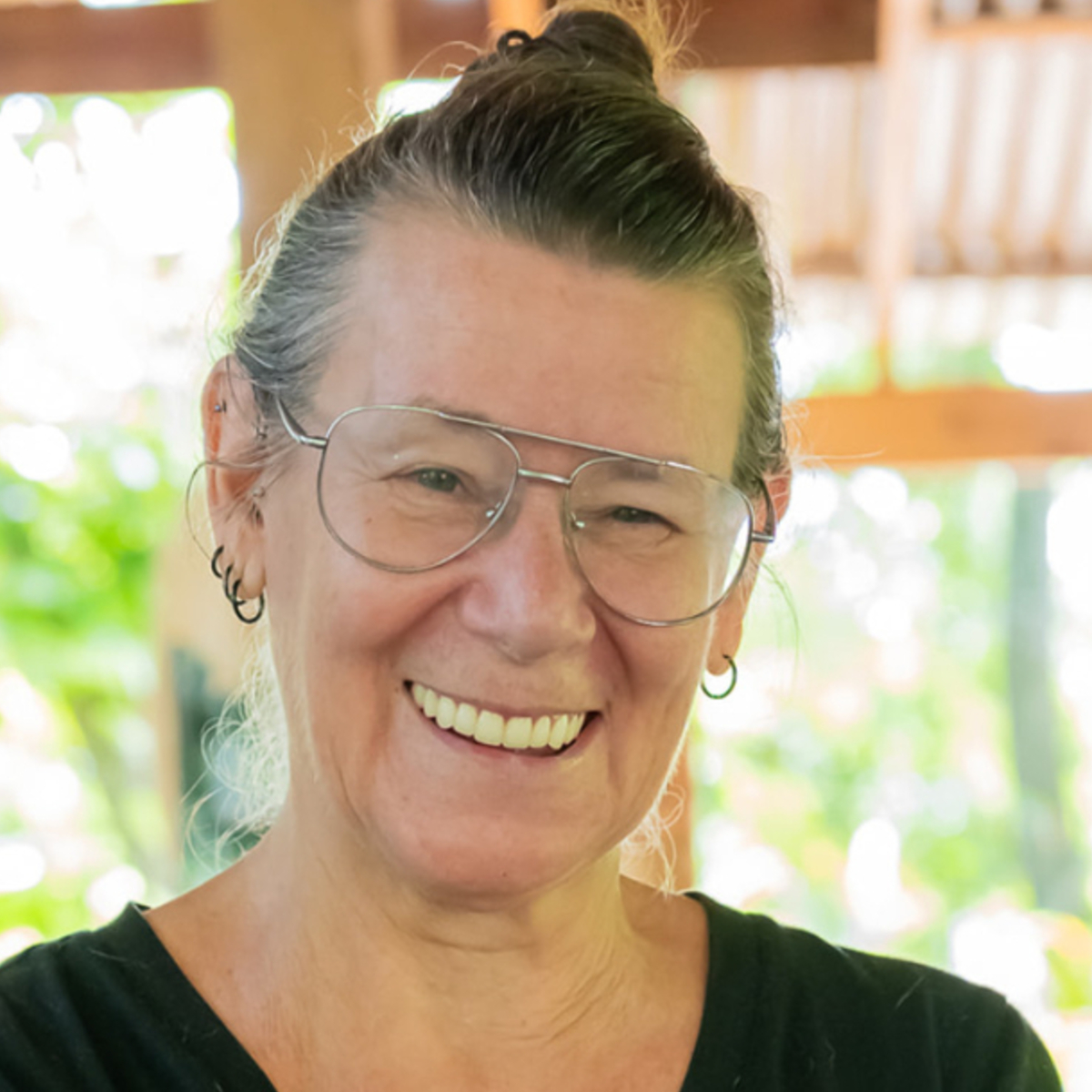
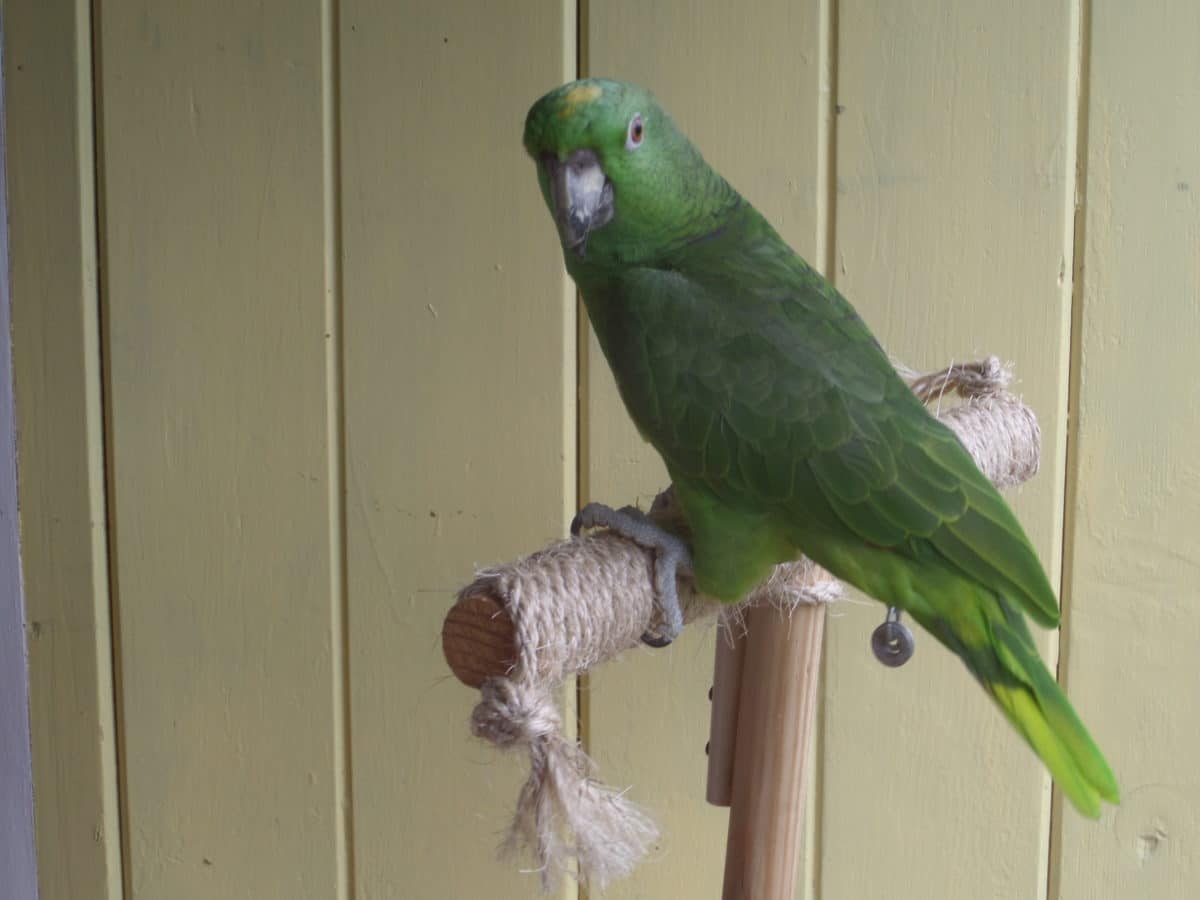


My husband introduced me to the joys of raising a parrot. He’d had a few parrots as pets over the decades and when we reunited almost five years ago, he had a small Quaker parrot, Griffin. Sadly, Griffin is no more, but when you’re a new couple, even a couple in your late 50s, raising a pet together seems like the next step. Off we went to a breeder about an hour outside of Austin, Texas, to get Gilligan, our then newly weaned, yellow-naped Amazon parrot. We even have her egg hanging on the wall in a frame. Now, almost three years after she hatched from that egg, I’m a proud and probably very annoying parrot “parent.” She’s affectionate, funny, playful and very talkative with a 200 word vocabulary and a great singing voice, which sounds a bit like mine, not so coincidentally. A full four stanzas of “Somewhere Over The Rainbow” and “Put the Lime in the Coconut” are in her repertoire.
You’ll see full-grown parrots in pet shops or at parrot rescue facilities because their owners passed away or didn’t realize how much work goes into raising them. Some breeds live to be up to 80 years old (we have a succession plan in place). Raising them is a very big responsibility not only due to their care and feeding but because they are actually very emotionally intelligent and dependent, bonding closely with their “flock.” Diet is very important. They can get heart disease if fed too many fat-laden sunflower seeds and, because it’s part of their survival instinct to keep illness a secret, you won’t know until it’s too late.
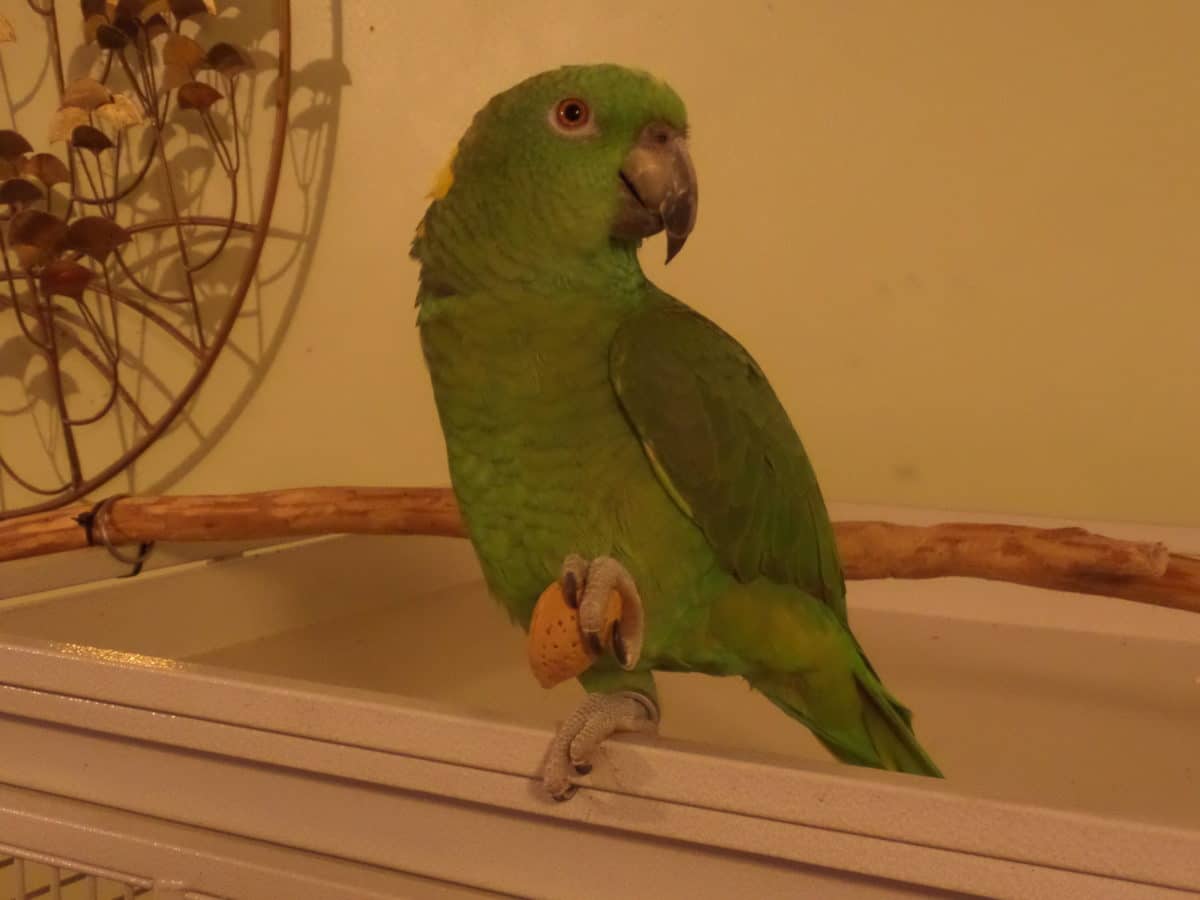
We fix Gilligan a big breakfast every morning and give her snacks throughout the day. Breakfast includes bird kibble and a few tablespoons of seed mix which contains nuts, dried fruits and chilies. We top that off with diced fresh fruit and vegetables including some of her favorites — grapes, blueberries (she loves to say “berry”), corn, sweet peas, apples, beets, asparagus, turnips, squash, fresh jalapenos and plenty of leafy greens. It should go without saying that you can’t feed a parrot sugar or junk food like salty chips; but chocolate, avocado and onions are actually toxic to them.
We travel to Belize periodically and have visited and made connections with the wonderful Belize Bird Rescue where their team rescues and rehabilitates Macaws, raptors and many yellow head Amazons, a species unique to Belize. While they’re not big on birds as pets and it’s not permitted to own native species in Belize, they don’t begrudge responsible parrot owners the joy of parrot ownership and bonding in certain circumstances. We hope to do some rescue work with them in the future.
Parrot Cake (for Parrots)
Metric conversions by The Cook’s Cook
Ingredients
- •237 ml (1 cup) apple juice
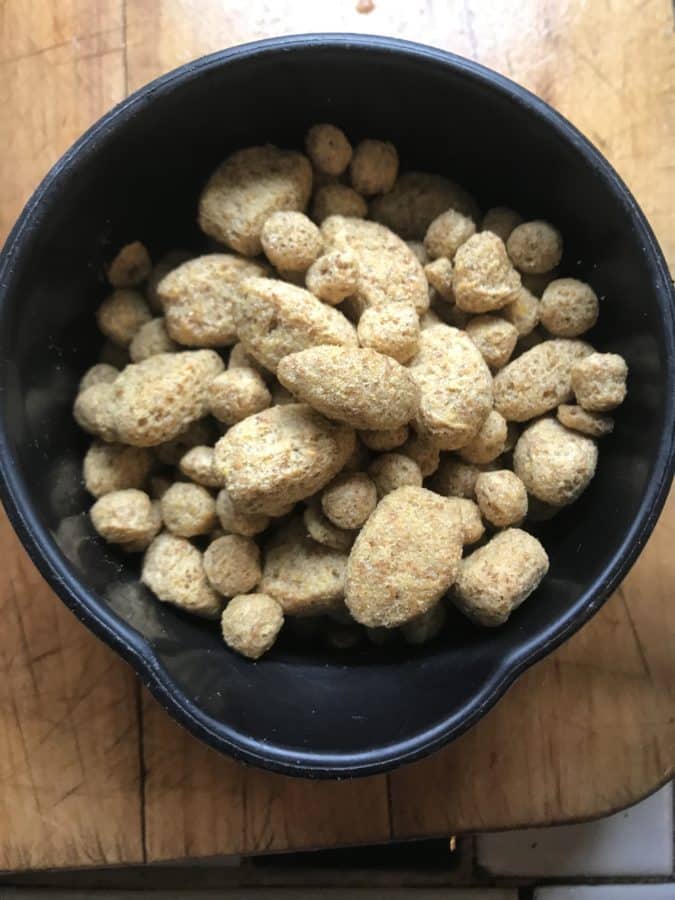
- •475 ml (2 cups) parrot food (mix of seed and kibble)
- •15 ml (1 tablespoon) peanut butter
- •119 ml (½ cup) coconut oil
- •2 eggs
- •1 large grated carrot (or other veg)
- •119 ml (½ cup) whole-wheat flour
- •237 ml (1 cup) yellow cornmeal
- •237 ml (1 cup) oats
- •237 ml (1 cup) dried coconut
- •30 ml (1/8 cup) crushed red pepper


Preparation
Heat the apple juice with 237 ml (1 cup) water. Pour over parrot food. Leave to soak for at least 30 minutes, mixing occasionally. Add peanut butter, oil and eggs. Mix well. Add remaining ingredients and mix thoroughly into a heavy paste using large spoon or hands, until mixture binds into a soft ball. Add a little more water if too dry.
Spread into a large, shallow baking tin greased with coconut oil (mixture should be around 2.5-4 cm/1-1 1/2 inches deep). Bake at 160°C (320 °F) for 50 minutes.
Leave to cool completely (preferably overnight) before cutting into very small cubes. Refrigerate and use during the week.

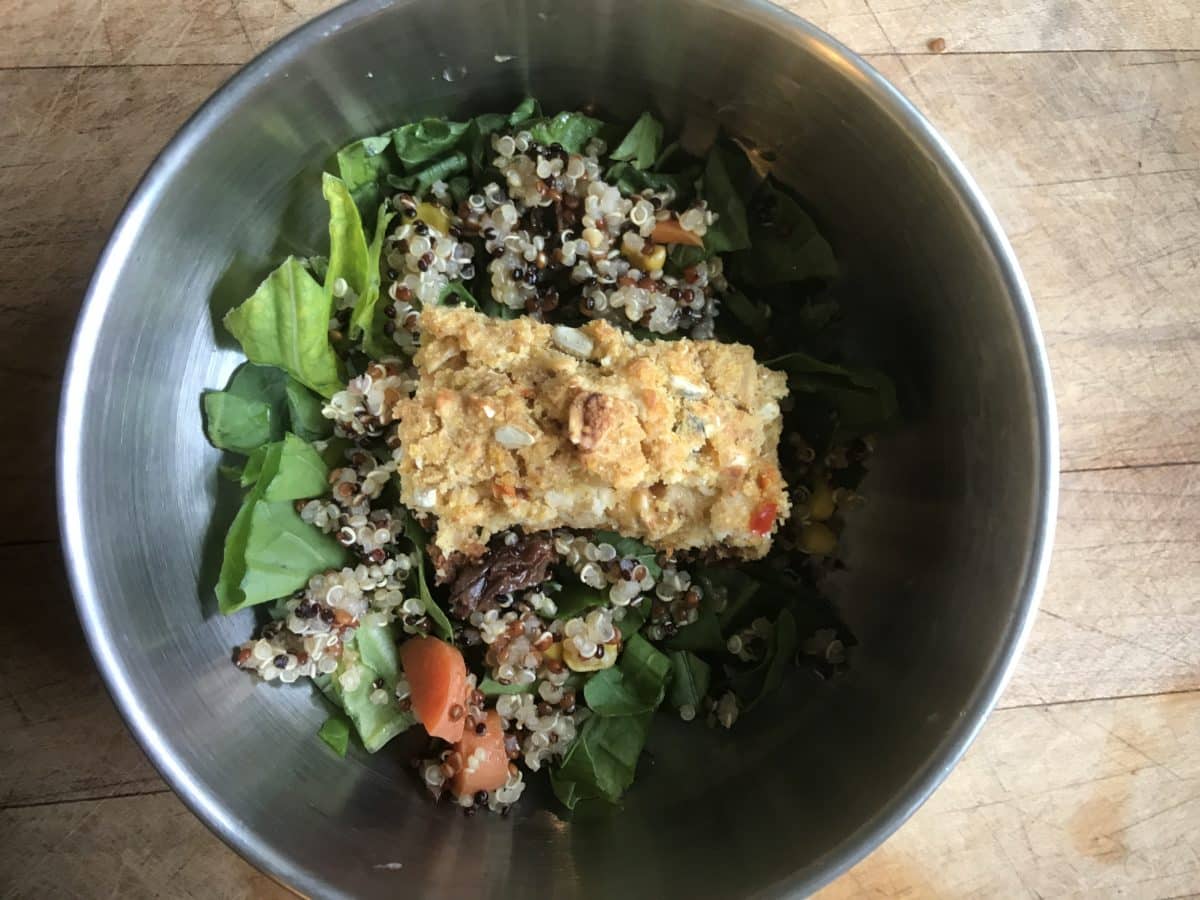
Quinoa Bowl (for Parrots)
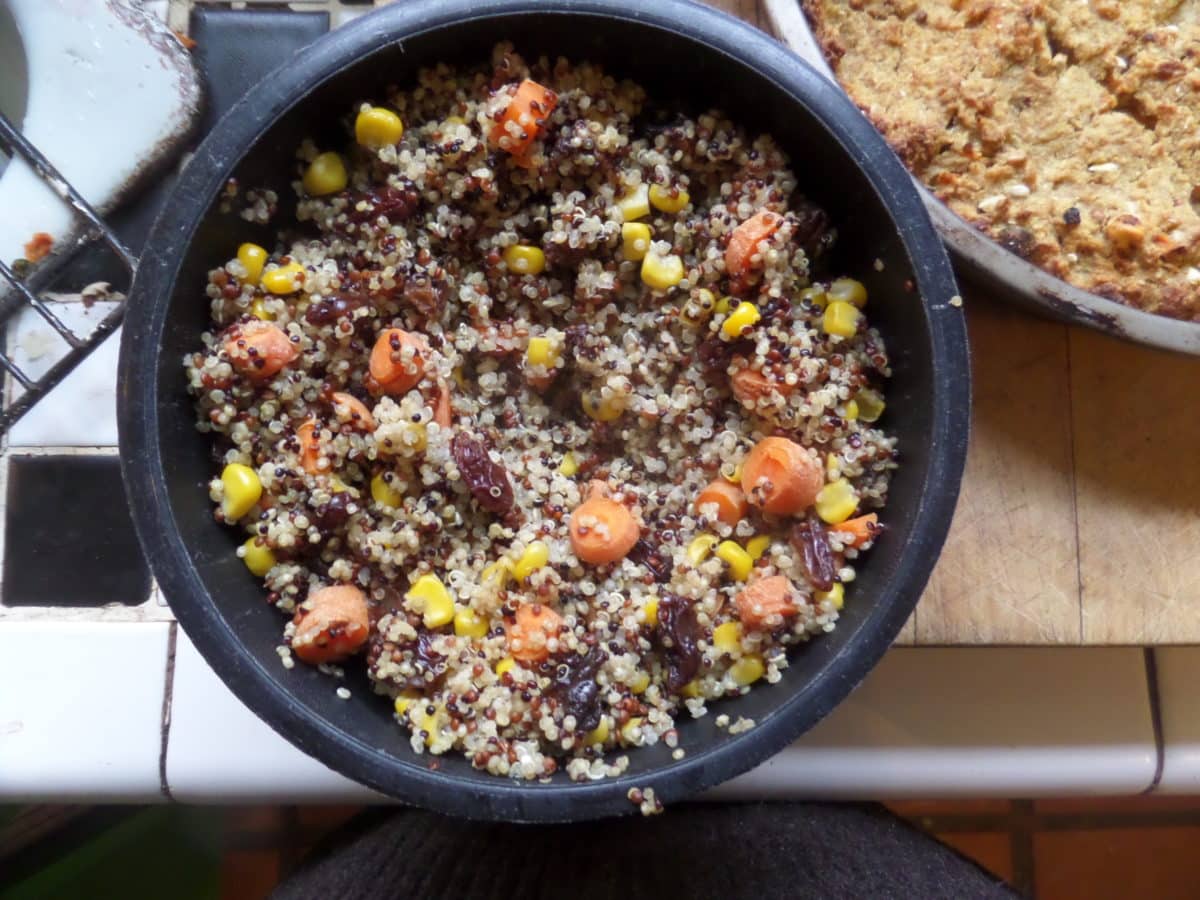
Quinoa is great for parrots because it’s high in calcium, protein and phosphorous. They can eat it raw, sprouted and cooked. We use corn and carrots but you can really use whatever veggies your parrot loves.
Ingredients
- •237 ml (1 cup) quinoa
- •Corn kernels
- •Chopped carrots
- •Raisins and/or dried apples (unsulphured, found in health food stores)
- •Cinnamon stick
Preparation
Boil 473 ml (2 cups) of water and add quinoa. Cook for 10 minutes, then add vegetables, dried fruit and cinnamon stick.
Cook another 5 minutes or until the quinoa is clearish and has a tiny tail sprouting from it. You may have to add a little more water if it gets too dry too quickly. Remove cinnamon stick, let cool and serve.