


A few years ago, my husband Jim and I tromped through the jungle with our friend Julio from the nearby village of 7 Mile. He showed us all around his property, where he was building a little camping area, complete with a palapa all set up for shelter and dining. Nearby, an outdoor wood-burning oven would soon cook up big pots full of escabeche. As we walked along the pathways, he pointed out some of what was growing, ginger with its bright red blossoms, a mango tree full of fruit, wild herbs and bitter greens.
“Julio, wait until you hear this! ” I began.”There’s a TV show in the United States called “Naked and Afraid” where people are left out in the jungle completely naked and have to find shelter and food for themselves. They filmed a couple of the seasons in Belize! I’m not sure exactly where they were, but it looked pretty much like what we see here. Here’s the crazy part. Some of the people have to leave the competition early because they can’t find anything to eat. They lose 30 pounds and more, practially starving!”
Julio listened intently, staring at me like I was telling him some wacky story about demons and wizards and jaguars about to jump out at us. The jaguar part could actually happen. I try not to think about that.
“I don’t understand this!” he finally blurted, outraged. “There’s so much food here!”
He then ran around pointing out all the things we could eat right then and there, filling in with suggestions for wildlife we could catch and cook (in-season, of course), including green iguana (aka Jungle Chicken), the chachalaca, one of the loudest birds in Belize, and gibnut, a large spotted rodent legendarily served in a stew to Queen Elizabeth II back in 1985 at the San Ignacio Resort. Forevermore known as “The Royal Rat,” it’s a highly prized delicacy I have yet to try.
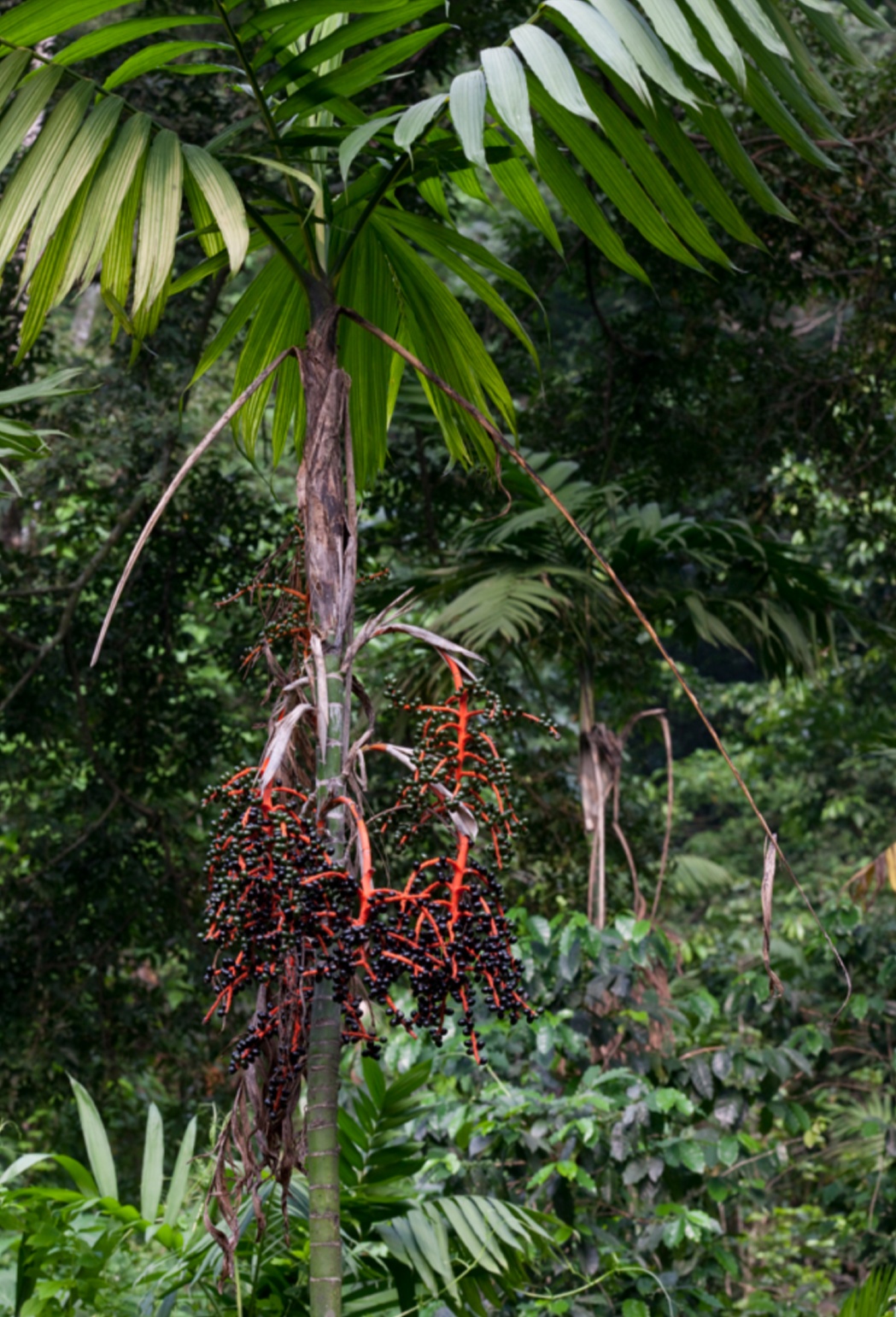
Julio continued to point out all we could eat in the jungle. “And this!” He ran up to what looked like a palm tree and pulled off a pod that resembled a thin, unshucked ear of corn. “It’s pacaya. We eat it all the time when it comes out, we fry it up with tomato and egg.” There is lore, maybe even evidence, that the ancient Maya ate pacaya, too.
He sliced open the husk, revealing dozens of long, yellow-green strands that looked like thinner versions of baby corn cobs. I plucked off a few of the strands and ate them raw, noting a touch of bitterness and a flavor and texture sort of like an artichoke. These are the flower cluster of the Pacaya palm (Chamaedorea tepejilote), more commonly found in other Central American countries, especially Guatemala, a mere 12 miles from where I live if I wanted to go through the jungle and over some mountains, or a 50-minute drive to the border town of Melchor de Mencos where Belizeans go for electronics and different brands of beer.
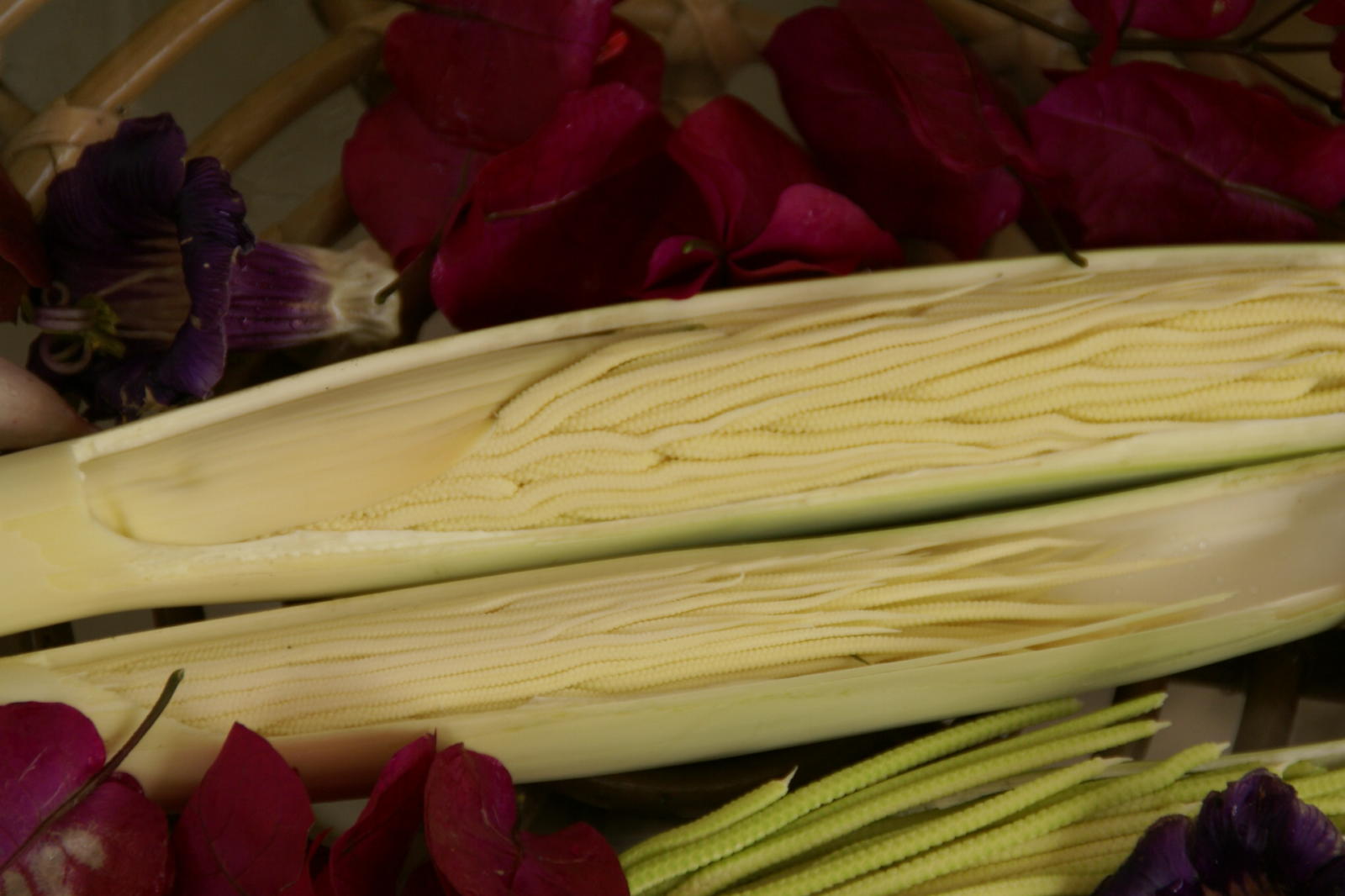
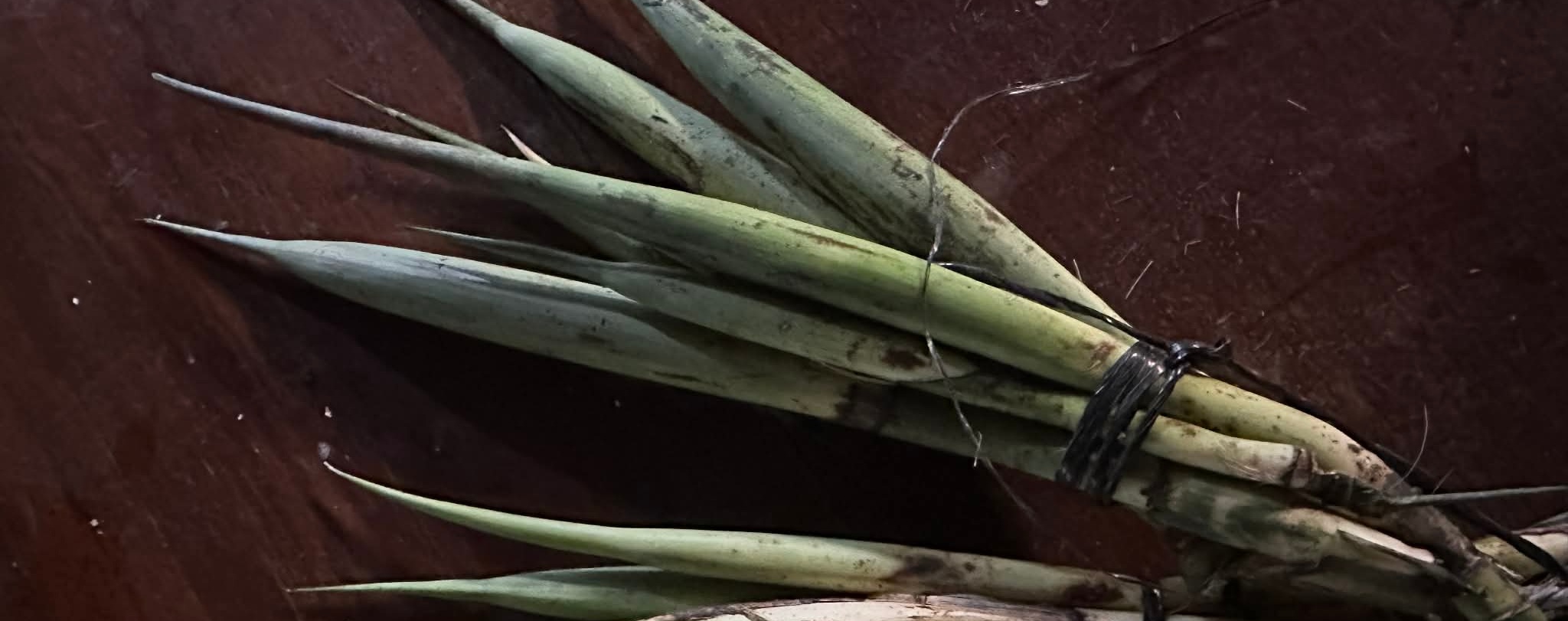
I hadn’t thought about that day or that pacaya for a few years because I rarely see it in the market, but last month, a few of the farm stalls at the big market in San Ignacio had some for sale. I picked up a small bunch and went to my favorite food stall for a breakfast burrito and fry jacks and the man sitting next to me also had some of the stalks. He launched into a list of ways to prepare them and when friend of his walked by with a bag full, too, they commiserated about the whopping $6 Belize ($3 US) we all paid for just one bunch.
I asked a few of my trusted Maya home cooks how they prepare pacaya. Our friend Hector suggested cutting the ends off each pod and boiling them in water for about 15 minutes. Remove the outer pod and shred the inside, then season with salt and pepper before frying with eggs, onion and tomatoes. Boiling decreases some of the bitter flavor and leaves more of the nutty notes. Another of his recipes is to simply roast them, then split open the outer pods and squeeze lime over the inner strands.
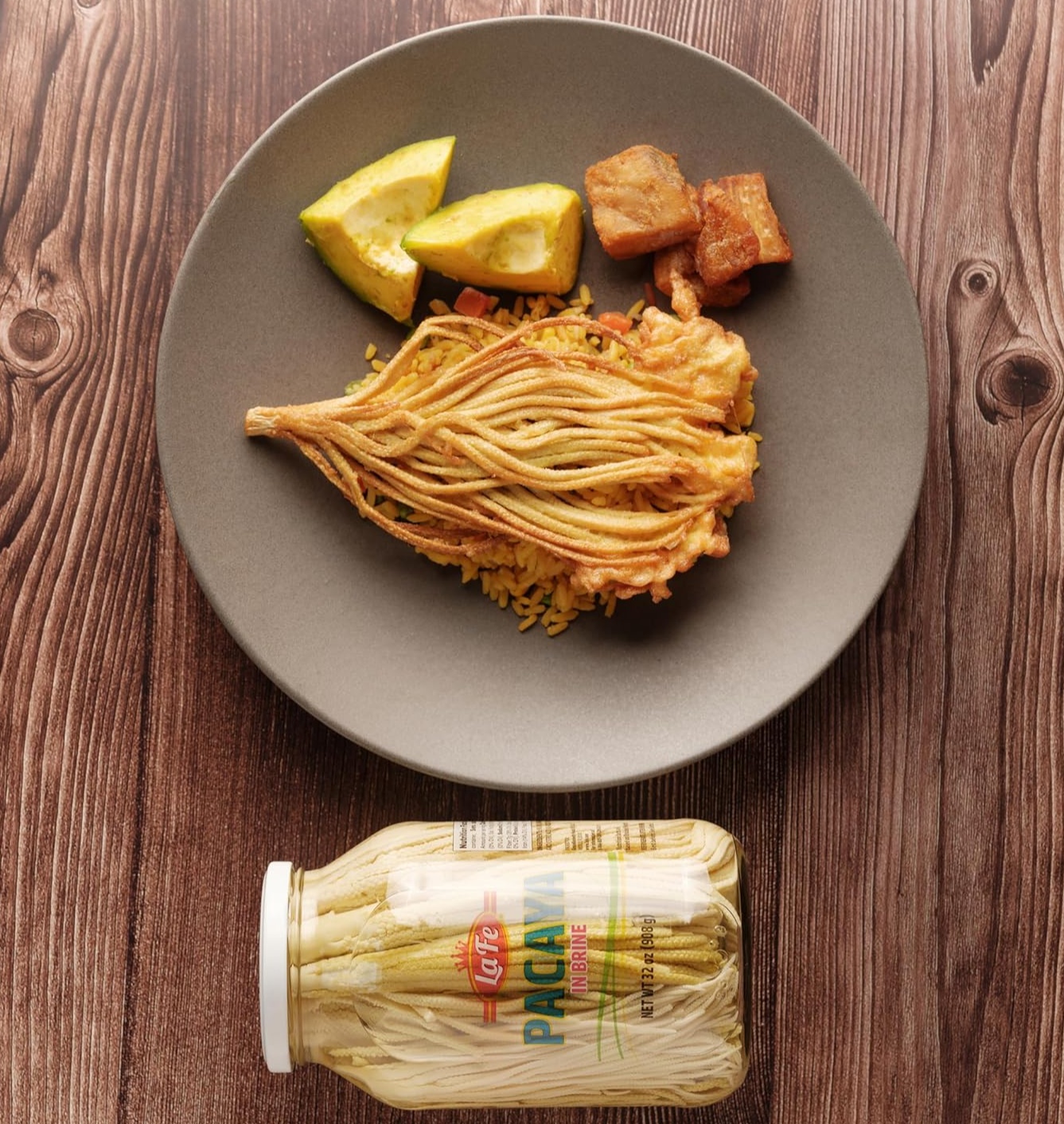
While the consensus seems to be to fry it up with eggs and tomato, which is what I did for our breakfast, I also learned that some home cooks deep-fry the clusters. Pacayas Rellenas is a dish that involves first parboiling the inner clusters, then stuffing them with cheese (or not) before dipping in an egg batter and deep frying. Serve with a spicy tomato sauce.
For those not likely to come to Central America anytime soon, you can find pacaya in brine in jars in your local Latin grocery store, just like you might hearts of palm. Give it a try.
And while I’m not likely to get lost in the jungle or be chosen as a contestant on a survival-themed reality TV show, buck naked or fully clothed, I do know that I can find at least a few things to eat out there in the wilderness, or even my own yard. Now that I know what the berries look like, I’ve identified a few of the palms growing just 20 feet from our palapa, no forest foraging required. 