Did you know that there are many different kinds of smiths? There’s blacksmiths (iron); whitesmiths (pewter); goldsmiths (gold); tinsmiths (tin); brownsmiths (copper); and silversmiths. Silver for silversmiths is their specialization, of course.
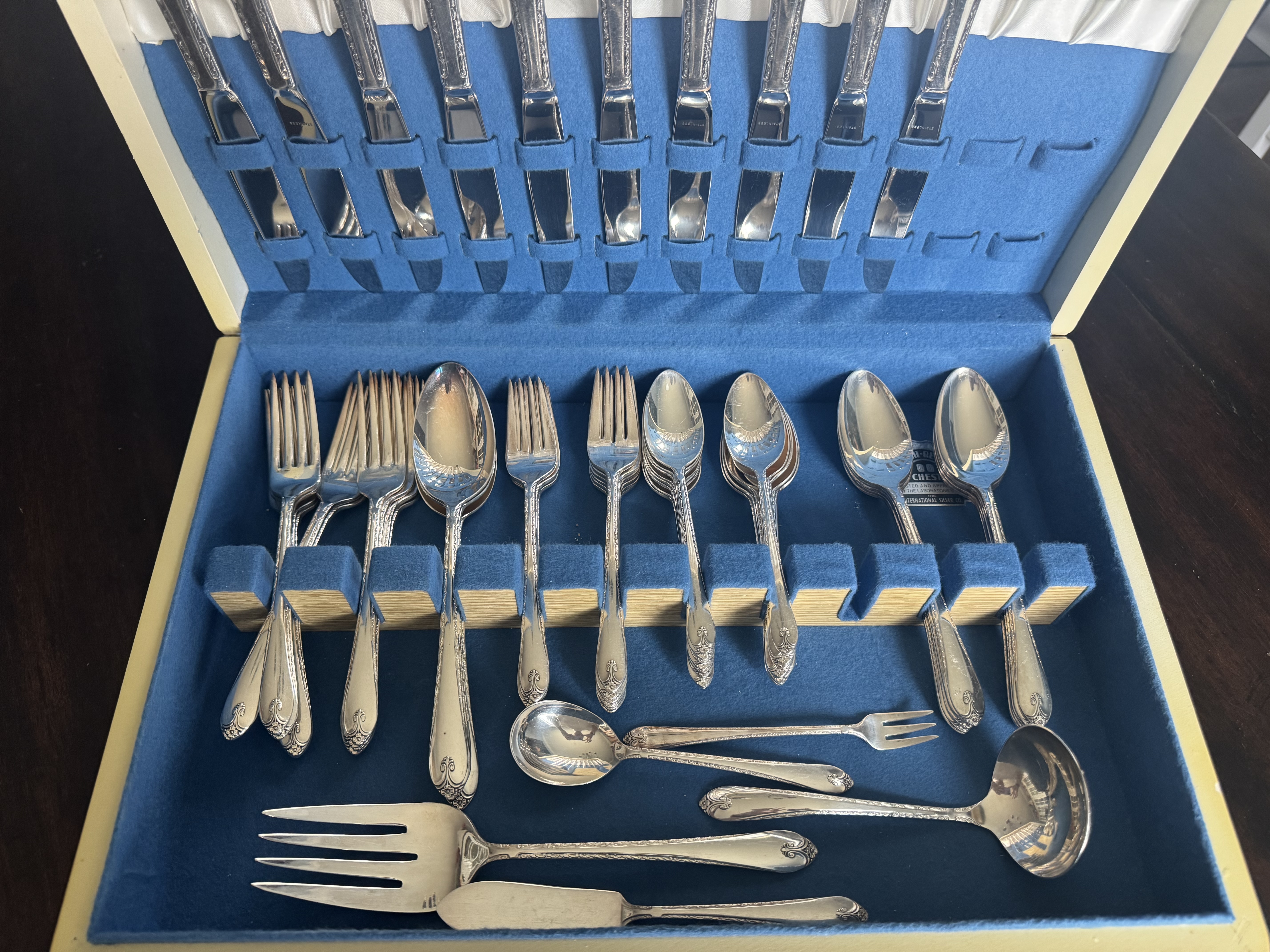
And, if you like to entertain in fanciest style, or you’ve inherited your grandmother’s forks, knives and spoons (like I did), then you may have a real silver “silverware” set in your house, too, made by a silversmith!
There are many interchangeable terms used for food “tools” these days.
The broadest way to describe them is to use the word ‘utensils’ which means not only the items you’d set by place settings, but also the items used for preparing the food itself in the kitchen. So, the term ‘utensils’ means forks, knives and spoons as well as the pasta strainer, the tongs, and the roasting fork plus anything in between.
The British will say ‘cutlery’ which is then specific to the table setting: forks; spoons and knives. In America, we’ll often use the word ‘flatware’ instead, but it refers to the same table items.
But silverware…that’s specific to the spoons and knives and forks made out of silver. You can also find silver plated wares, but originally the term, silverware, was meant for the table settings made of pure silver alone.
One way to tell if you’re offering your guests real silverware is how soft and malleable it is. Like other nonferrous metals such as tin and copper, silver and gold are soft. Which means when you make a spoon or fork out of it, it’s typically a bit more…flexible. This is important if you plan to use your silverware often.
I have a confession.
I adore entertaining.
And not just “let’s come over and eat together” entertaining. I mean dinner parties with dress codes, invitations sent five months in advance, costumes, cloth napkins, lightbulb changes and usually three too many courses than I was equipped to handle with a guest list of 20.
My friends, who are total delights to have in the kitchen, often help out in between courses with mad dashes to the sink to quickly rinse a few plates and pieces of cutlery so I can serve the next course because even with my collection of plates and knives and napkins, I still run out when I have decided that serving ten mini courses is not as good as twelve.
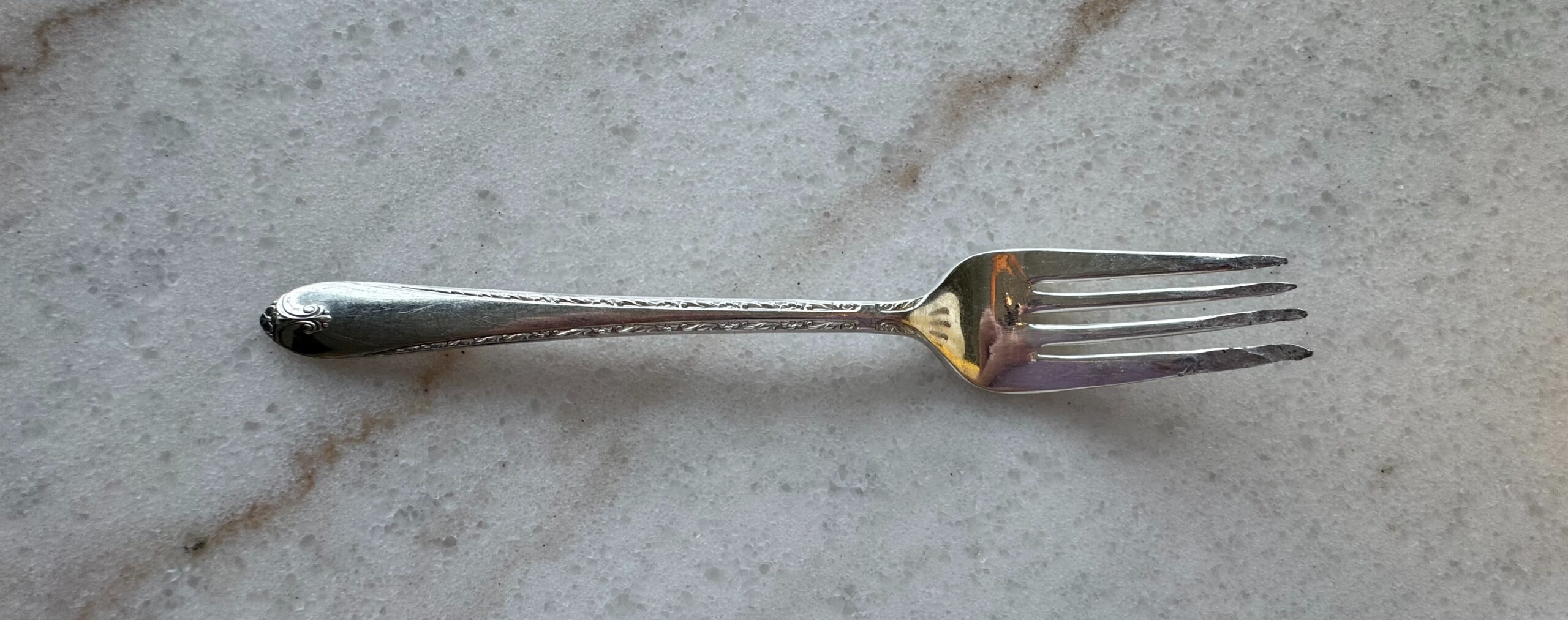
This only becomes a problem when folks are in ballgowns and masks and attempting to speedily help me wash dishes, only to put one of my grandmother’s silver forks down the garbage disposal and…turn it on.
Unsurprisingly, soft silver becomes very twisted in a garbage disposal. Because it’s so soft, the garbage disposal is fine. The vintage fork? Not so much.
This is where food and smithing come together. I’ve lost count of the times I’ve had to run into the metal shop (especially when it was still in my home garage) to grab tools or, in this case, quickly hammer out the silver so it could go back on the table for course number seven. It didn’t go back to perfect tongs. Once metal stretches, the crystalline structure of it can’t really be reformed without melting and re-pouring. But it was usable again, which is all that matters.
And now, the silver fork, made by a silversmith many decades ago, has a memory, too.
My grandmother would be pleased.