


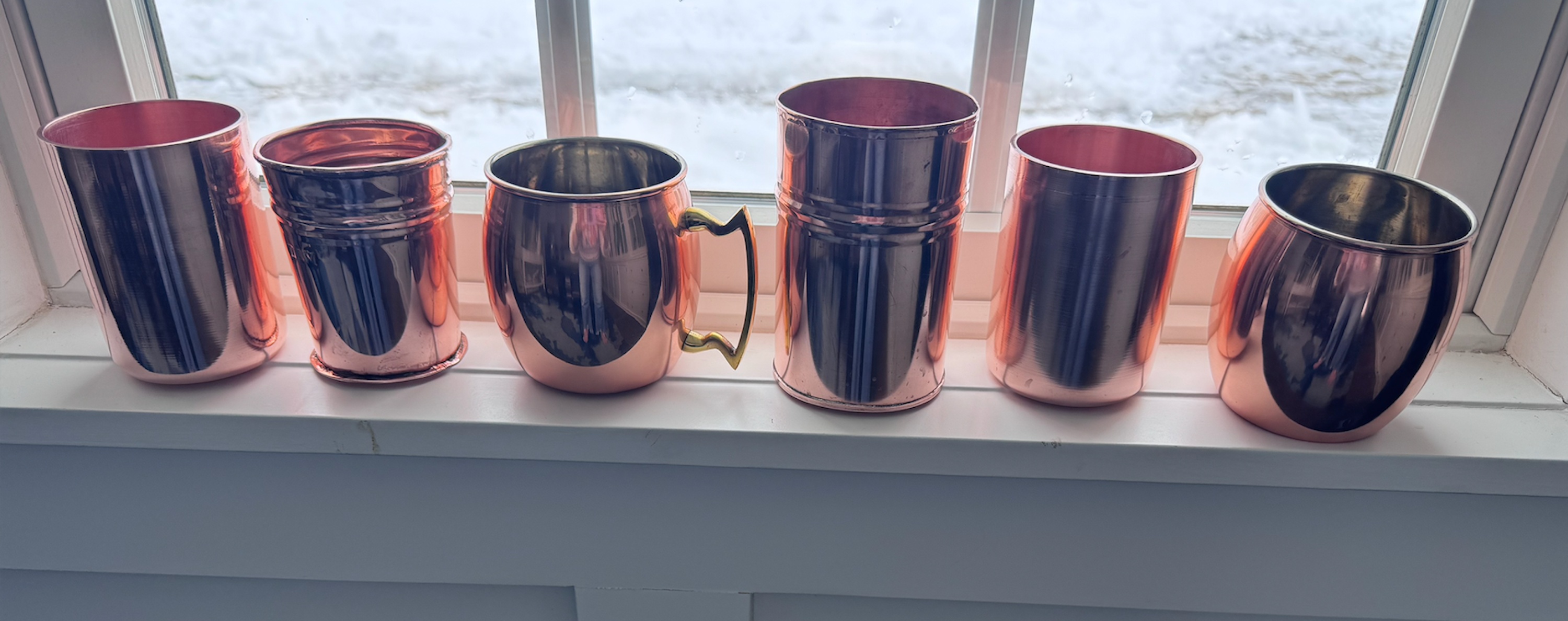
Copper drinking vessels go back centuries. Actually, millennia, if you count bronze bowls and cups in antiquity. I’m not sure if the Romans and Greeks understood that copper was a contact killer (meaning bacteria and viruses can’t reproduce when in contact with copper), or they just liked how pretty the metal was for holding their wine and water and barley beer and the health properties were a side benefit. But, suffice to say and thanks to many archeological digs, we have found many drinking vessels made out of both copper and bronze – enough to know that if you were lucky and probably a touch fancy and high society, you had one of these. Or at least, you would get to be buried with one.
My secret love is archeology. When I was in sixth grade, that’s what I wanted to be, with some romantic, glorious notion that finding tombs like King Tut’s was part and parcel with the job, and totally guaranteed. I even spent part of my college career plotting to go on digs in Syria and help translate the bits of Aramaic texts they’d find in the sands there.
Neither of those career paths transpired, but that’s OK, because I now get to make things that will last centuries. Actually, millennia, if you count on landfills being dug up in five thousand years. Someone will find a copper cup I’ve made and go “Look at what they were drinking out of! It’s still here!”
The reason I know this is possible is because copper doesn’t rust. It’s a non-ferrous metal, meaning it has no iron in it. Iron is what rusts in ancient items (iron is ferrous!). Bronze doesn’t rust either, as it’s a mixture of copper and tin, and both of those metals are also non-ferrous. Which means while it’s not a given that any of my items will turn up in an archeological dig, I have a chance, and that’s the way I’ll hope to live out my childhood dream of participating in archeology.
Building copper cups has become something of a common part of my work as a coppersmith, and serving drinks in them is also part of the fun after they’re done and have been checked for leaks along the side and base seams. And, as a Wisconsinite, there’s one drink in particular that I like to serve in copper cups to show off not only the culture but some pretty golden-bronze copper on the tray.
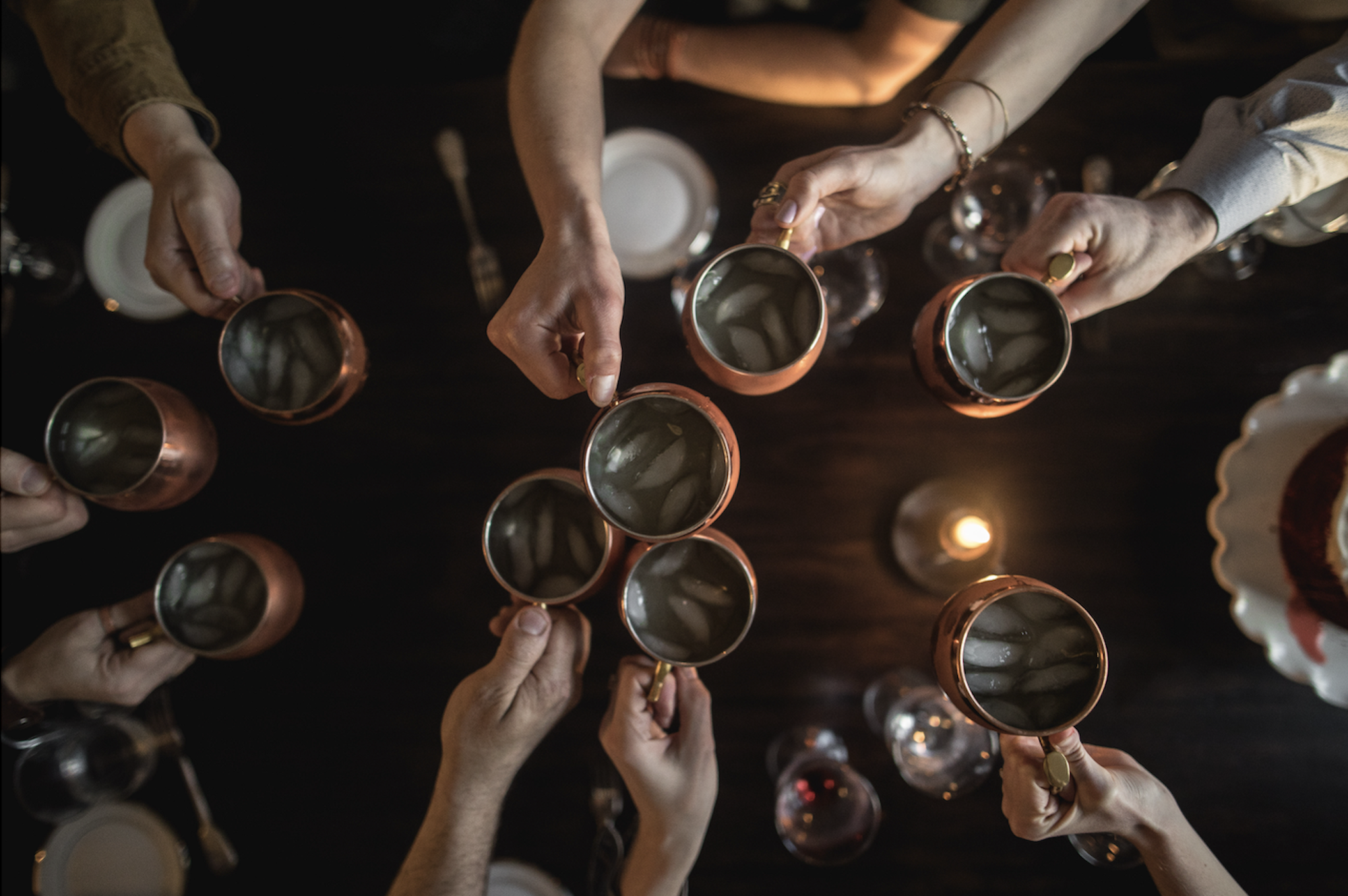
Most people are used to seeing Moscow mules served in copper mugs. There’s no rule that says we can only use a copper mug for that particular cocktail, though. The science behind why one drinks in a copper cup (beyond the bacterial killing superpower) is because copper gets extra chilly when filled with ice due to the conductive properties of the metal. Your drink stays colder longer than if you pour the booze into a regular glass.
So, I like to offer Wisconsin Old Fashioneds in copper cups and mugs. Here in my state, there’s an ongoing debate on which alcohol to use. Many people say brandy, but I grew up using whiskey. There’s also “Old Fashioned Sweet” and “Old Fashioned Sour”. These days, I have started to see these drinks turn up in fancy city bars with muddled cherries and oranges (the “sweet” version) with homemade simple syrup or smoked before serving.
That’s lovely and you can totally go all out with this drink. But if you want the traditional, simple version I grew up with, bare bones and no frills, here’s the one my father taught me, with the small variations we offered at home cocktail parties to relatives and friends around the bonfire.
And while you don’t have to serve it in a copper cup (that might someday be in an archeological dig!), it adds a touch of sparkle and joy if you do! 

The Recipe: Wisconsin Old Fashioned
3 – 4 oz whiskey or brandy (your choice; you can use either for sweet or sour versions)
5 oz white soda such as 7-Up for sweet or 5 oz Squirt for sour
A dash of Angostura bitters
Ice
Add together in a glass and stir briefly before serving.
Garnish as desired. I grew up having either 2 Maraschino cherries OR 2 green olives.
