





I awake on winter mornings at precisely 6:00 am. I know this because the resident turkey flock begins fussing and calling every day at this exact time. In the early dawn light, if I am very lucky, I can just barely see them as they balance precariously on the thin branches of the tall pines before each in turn spreads its wings and floats gracefully down to the snow-covered ground. They know where breakfast is being served: a generous meal of cracked corn awaits at my neighbor’s feeding station.
A snowy winter’s day brings with it a constant parade of hungry visitors, and over the years I have taken great delight in serving up a tempting treat to please each avian palate. Among my guests are seed eaters, fruit eaters, carnivores and strict vegetarians. A variety of offerings is best, placed in an area with plenty of safe cover for them and with an open viewing area for you to enjoy the activity. A squirrel baffle is a necessity!
In choosing my menu I consulted several sources, and I selected from them the most nutritious and high energy ingredients—seeds and fats. The fats are rendered to form a stable matrix that, when cooled, shape solidly into cakes that contain the various seeds, nuts and fruits so essential to the winter birds’ diet.
To make bird cakes I begin by rendering a large hunk of beef suet. The act of rendering requires slowly heating the fat until it is completely liquid, then the solids remaining are strained away.
You want the fat to be perfectly clear. This will keep your cake from becoming rancid. As the liquid fat cools, you may add your nutrient-rich foods. This soft batter is then poured into molds.
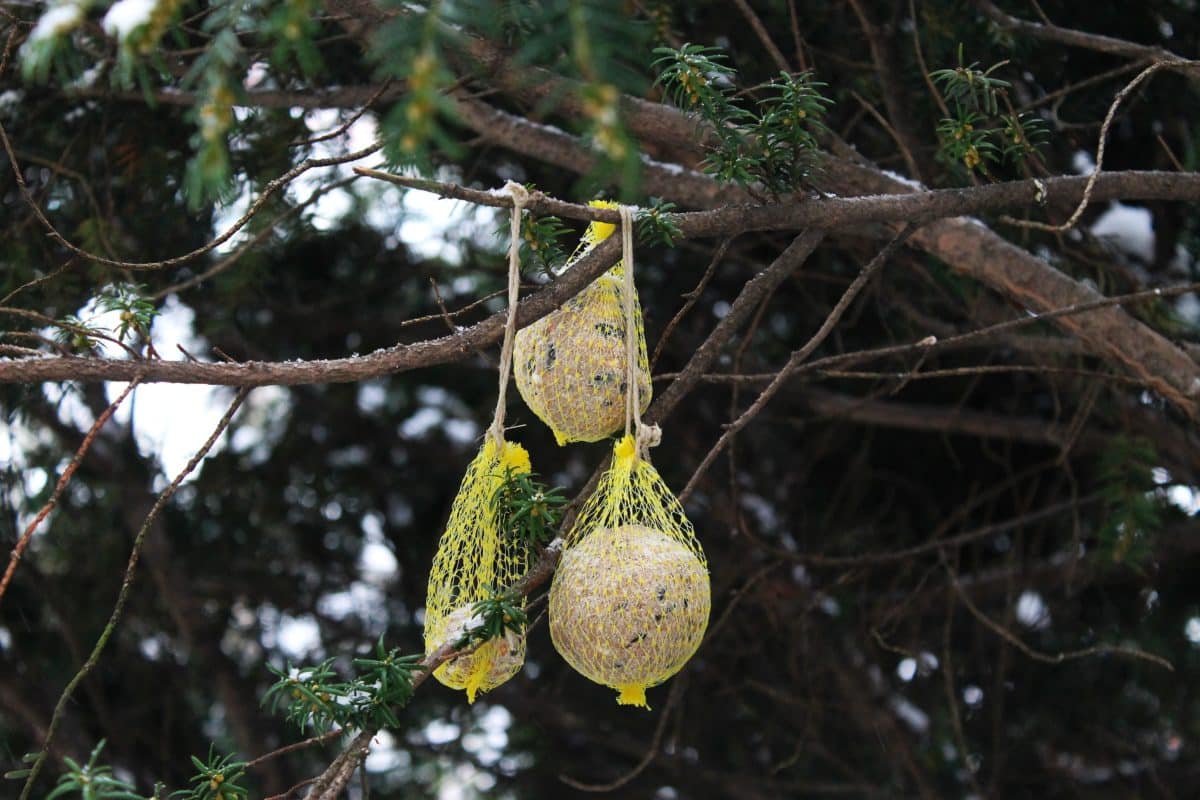
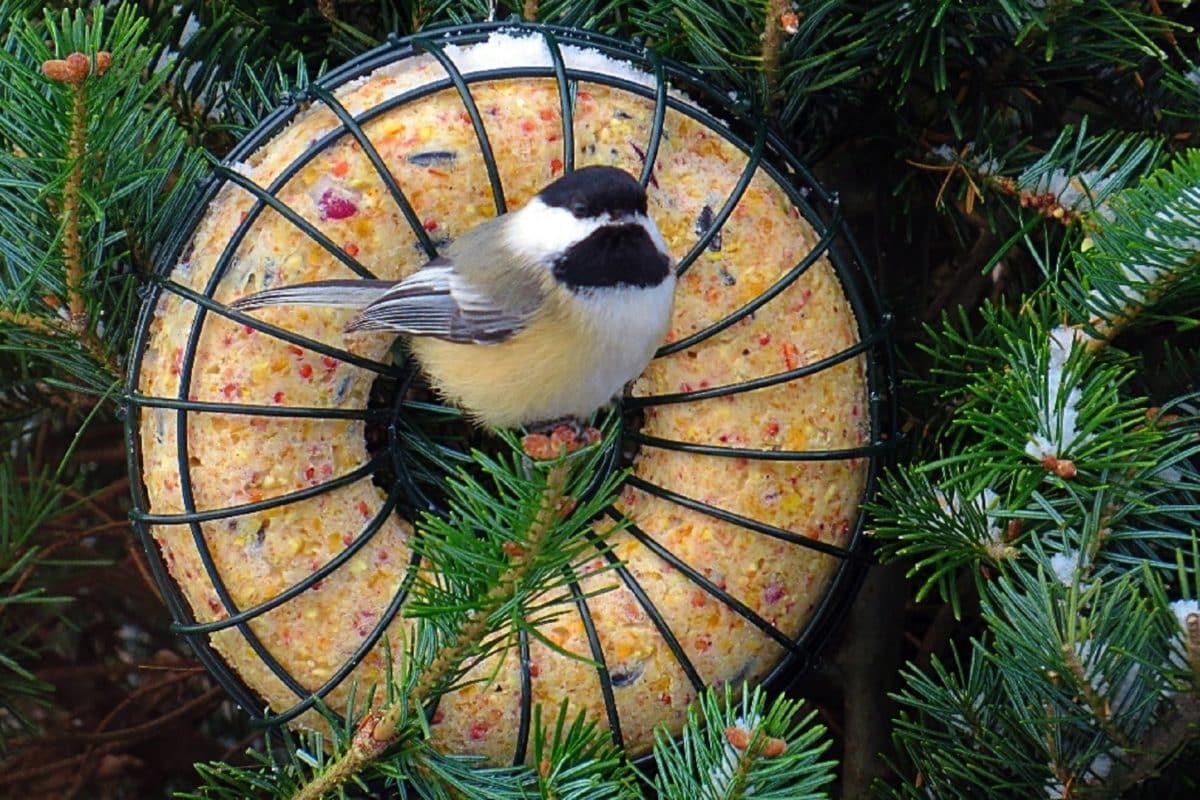
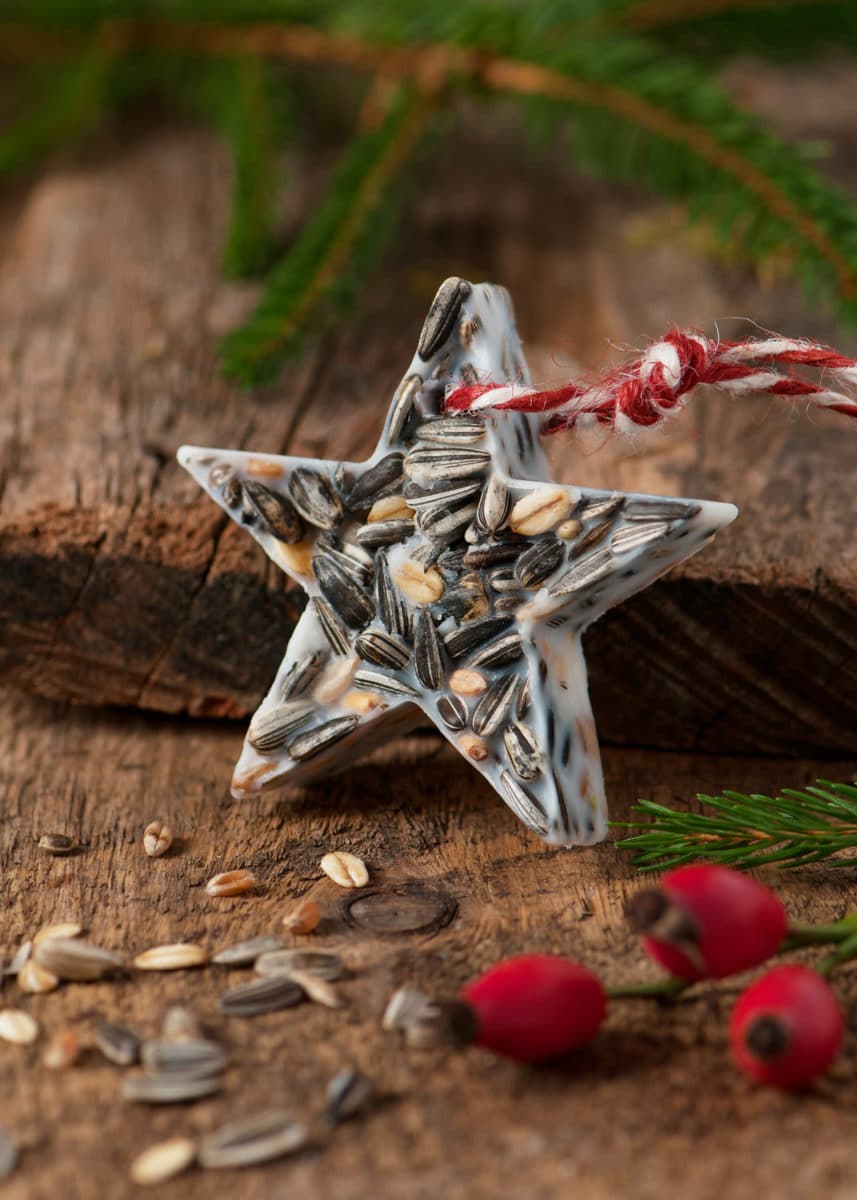
These can be as simple as a rectangular baking dish or may be a more decorative bell or donut-shaped mold. Alternatively, the batter can be spread into holes drilled into a log or pushed into a wire suet feeder, either of which may be suspended from a branch. Suspending bells, balls and other molded shapes requires a hole to be poked into each cake for a ribbon or twine.
The recipes that follow are examples to be adapted as needed. What will work for you and your birds will depend not only on your sense of the aesthetic, but on the species you plan to attract and the safe cover you provide at your feeding station.
Fine-Feathered Entree
Adapted from the Old Farmers’ Almanac 1984
Ingredients
- •3 parts rendered suet
- •1 part corn meal or finely cracked corn
- •1 part peanut butter or other nut butter
- •1 part sunflower kernels or chopped nuts
- •1 part brown sugar
- •1 part chopped dried fruit (currants, raisins, prunes, etc.)
- •1 handful of fine sand


Preparation
Combine all of the ingredients with enough water to get the consistency of cooked oatmeal. Cook in double boiler until well-blended.
Put into small molds or containers. Refrigerate until hardened.

Peanut-Butter and Suet Seed Cake
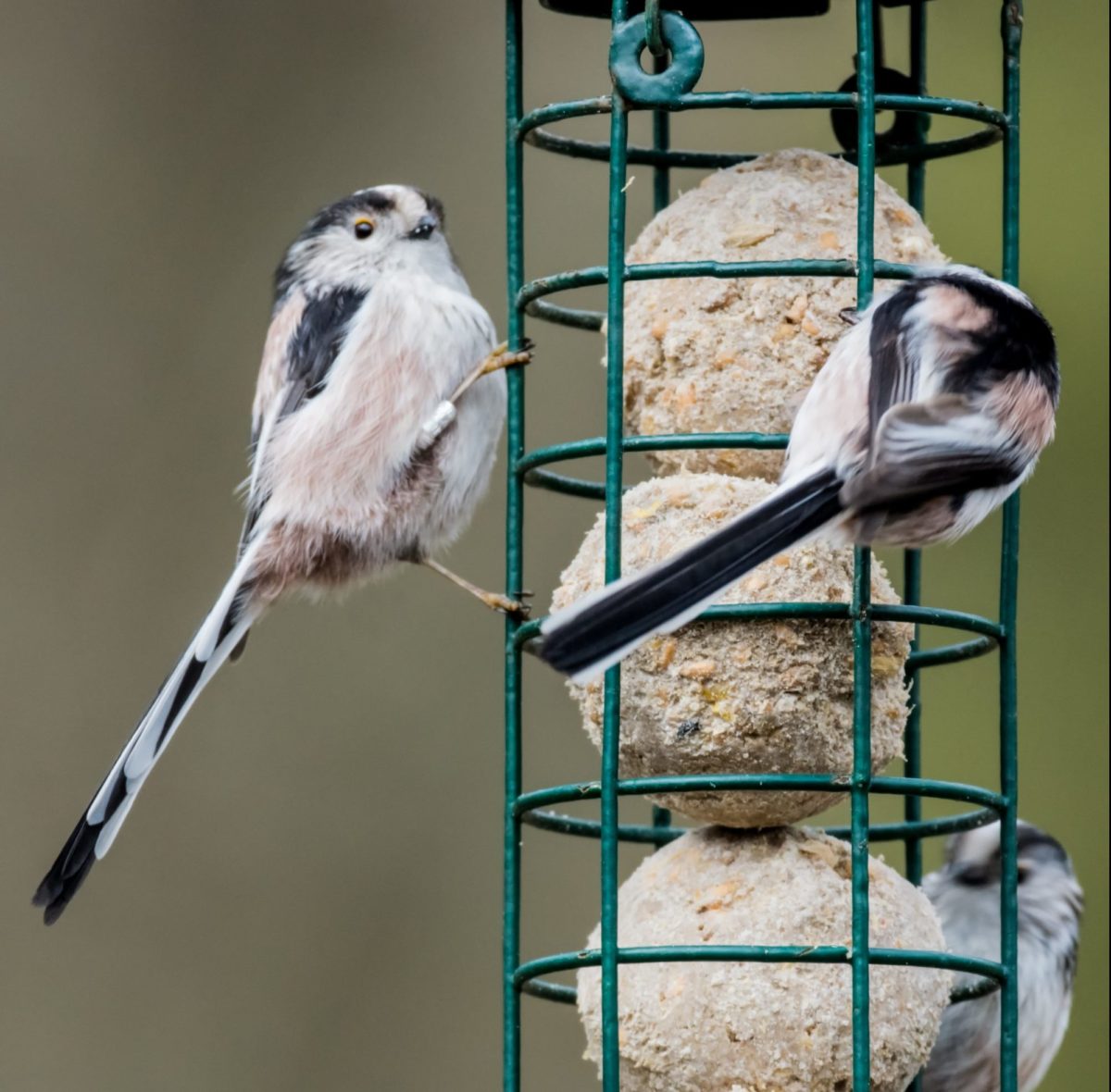
Ingredients
- •473 ml (2 cups) melted peanut butter, rendered suet or a mix of both
- •473 ml (2 cups) cornmeal
- •Sprinkling of fine sand
- •473 ml to 710 ml (2 to 3 cups) wild bird seed
- •Mixed raisins, nut meats, and chopped peanuts
Preparation
Slowly melt peanut butter/suet over low heat. Add cornmeal and sand.
Slowly add enough warm water to make a stiff dough. Mix in bird seed. (See Note.)
Add raisins, nut meats, and chopped peanuts, and mix again.
Pack mixture into small foil pans or a large flat pan, and refrigerate overnight.
Cut into pieces for tying onto tree branches or placing in a wire suet feeder. Or spread dough in holes drilled into a log and hang.