





Before I ever set foot in Paris, I imagined shopping in the open-air markets. I could see myself walking beside the stalls with a string bag or one of those wicker baskets, the kind that look so beautiful, but turn out to be unwieldy and uncomfortably heavy the instant you drop in the first potato. In my dreams, I spoke fluent French and was always getting secret recipes from the vendors.
I did visit markets on my first trip to Paris, but all I bought was a basket of mirabelles, small plums with a fleeting season. I didn’t have a kitchen where I could cook those gorgeous eggplants or any of the glistening fish that stared at me with clear, jewel-like eyes. I went to markets on every trip I ever made to France, but it wasn’t until 20 years ago, when we signed the lease on our first Paris apartment, that I could really shop at them. And no, my French wasn’t as fluent then as it had been in my dreams, but it progressed and I even got recipes from the sellers.
When I first moved to Paris, a friend, a veteran marketgoer, showed me the proper (that is the French) way to shop. “Don’t buy even so much as an apple,” she admonished, “until you’ve seen everything.”
You’ll probably end up buying from your favorite vendors, but until you’ve walked the length of the market and seen what everyone’s brought that day, well… how can you be sure you’re not missing something wonderful?
And so I always scope out the market before I shop, making a note of what looks particularly good or unusual. The walk also gives me the opportunity to change my cooking plans.
It drives my husband, Michael, completely cuckoo that I head for the market with a list and return with plenty of stuff, little of it from any list. But then, he’s not a cook. If he were, he’d realize that the market is as much a source of inspiration as it is of supplies.
It will be asparagus, asparagus, asparagus, until the season ends. Then there will be strawberries, many varieties of strawberries, and you’ll find your favorites and you and everyone you know will eat strawberries until, they too, disappear from the stalls. And then it will be melons and, soon after, the first apples and the root vegetables and before you want it to be, game season will arrive and the market stands will be heavy with plumed birds. The Paris markets are a calendar unto themselves.
Like everyone else who shops a market regularly, I have my favorites: the fruit-nut-and-spice man at the Tuesday and Friday markets; the Italian vendor at the Sunday organic market – his gorgonzola is the best I have ever had; and the Sunday apple seller, who is not cheerful, but whose apples’ deliciousness override his scowl.
But the market that I think of as truly mine, is the covered market – I’m there every day.
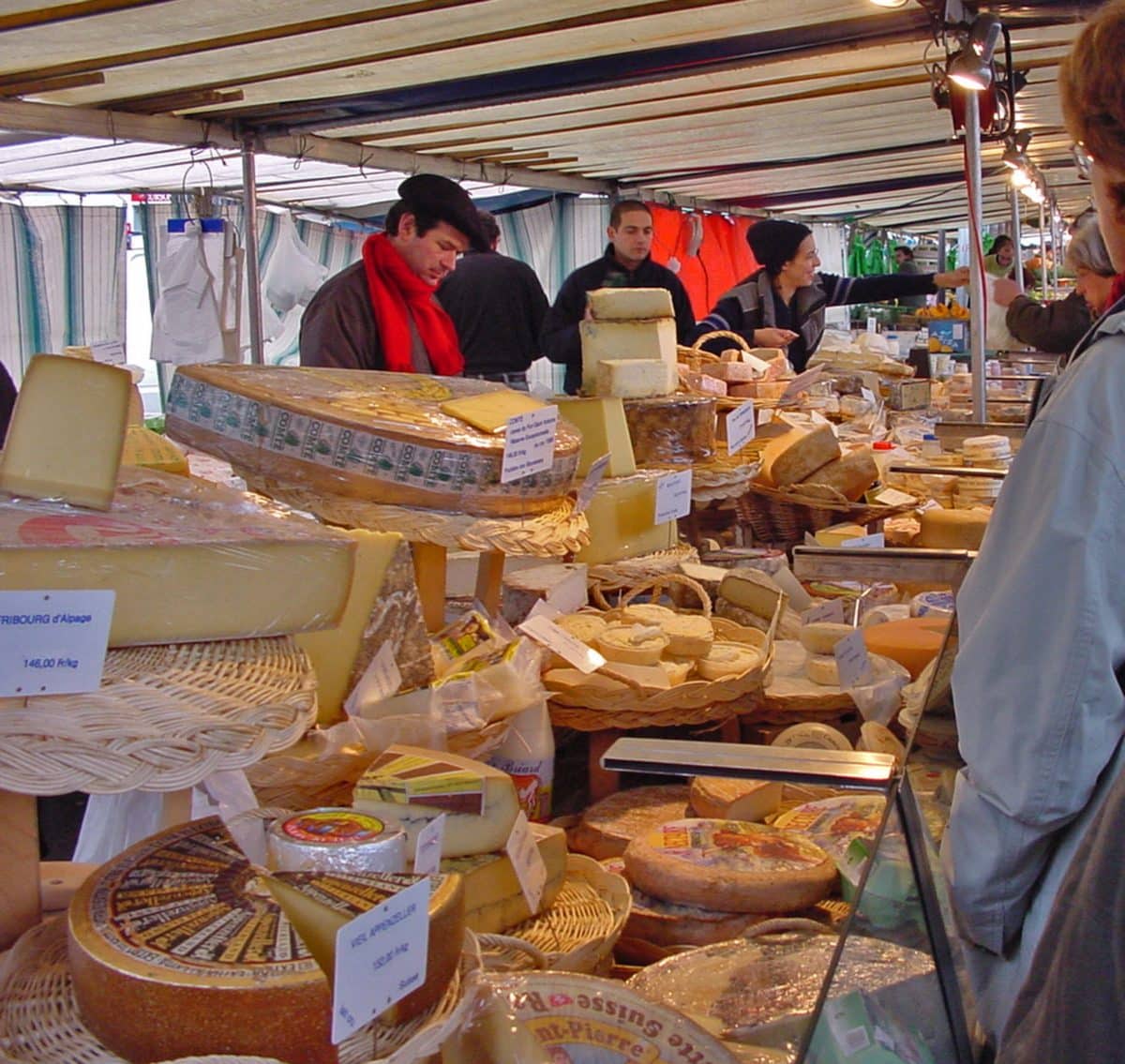
The market doesn’t have the bustle and charm of some other Paris markets – it doesn’t have the energy of the Marché des Enfants Rouges nor the diversity of the Marché Aligre – but it’s got what a day-to-day cook needs: two butchers; two fish markets; one vendor who specializes in Greek foods (he’s my steady source of preserved lemons); one store with everything Italian; one stall that’s a mini natural-foods market; a few prepared-food vendors (I’m vague on these because I don’t shop with them, just as the bakery there isn’t ‘mine’); a very good wine shop; a grand stall in the center of the market that sells produce and fine hams, cured meats and housemade jams and pickled vegetables, and good ice cream too; and Fromagerie Sanders, the reason I’m in the market daily.
I would be at the cheese stand endlessly for cheese, yogurt, milk, cream, farm eggs and small-batch cultured butter no matter who owned the place, but that Michel and Twiggy (yes, that’s her real name and yes, she’s French) are the proprietors quintuples the pleasure.
Twiggy is the first person I see when I walk into the market and I often don’t get further into the space for another 15 minutes or more, because after the traditional kiss on each cheek, there’s the neighborhood news to catch up on, travel plans to discuss – Twiggy travels often and far and always in search of great opera performances – and tales of our children to tell. Oh, and of course there’s cheese to buy.
At home in Paris, cheese is a part of every dinner. Depending on the season, the regulars will be comté, brie, camembert or, in the winter, our favorite cheese, Mont d’Or, ripe enough to eat with a spoon. And when company’s coming, the cheese plate always has at least three cheeses, one of which will be a special treat for me: goat cheese. Because Michael doesn’t eat chèvre, I buy it only when I know I’ll have people who’ll share it with me.
Twiggy knows that Michael doesn’t like goat, but she also knows just about everything else he doesn’t like and all of what he loves, a fact that came in handy when our son, Joshua, wanted to put together a surprise package for us. All he had to do was say, “Twiggy, I want something for my parents.” Done! Michael’s favorite Gruyére was in the package along with a runny Saint Marcellin, a tiny chèvre just for me, a round of fourme d’Ambert and a plaquette of butter speckled with grains of fleur de sel. It was perfect.
We all want to know our farmers, but it’s pretty great to know our cheesemongers, too.
Rosemary-Parm Cookies

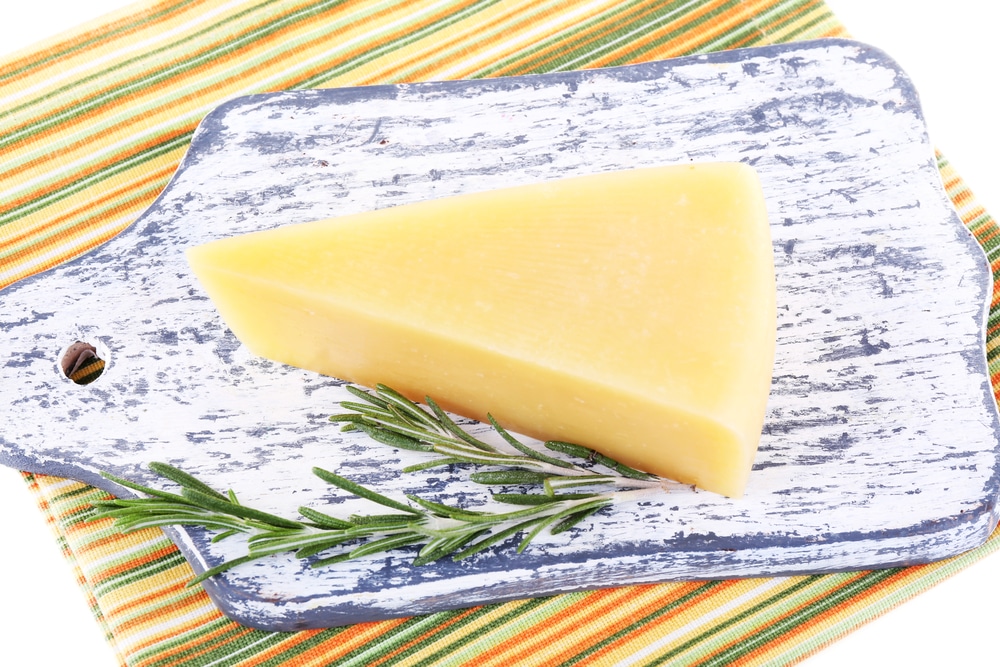
It’s hard to decide what’s best about this cookie. The texture’s a definite attention-grabber: It has a slight flakiness at first and then it’s all melt. The flavors of the rosemary and Parmesan, one of those meant-to-be matches, are front and center. For the crumbliest texture — a good thing here — the cheese should not be very finely grated. A word on the nuts: When I began making these, I used toasted almonds, and the cookies were very, very good. If almonds are what you’ve got, use them. You won’t be disappointed.
Recipes adapted from Dorie’s Cookies by Dorie Greenspan, Houghton Mifflin Harcourt, 2016
Ingredients
- •45 ml (3 tablespoons) sugar
- •30 ml (2 tablespoons) finely chopped fresh rosemary
- •272 grams (2 cups) all-purpose flour
- •60 grams (½ cup) toasted pecans
- •30 grams (⅓ cup) lightly packed grated Parmesan
- •2.5 ml (½ teaspoon) fine sea salt
- •226 grams (2 sticks; 8 ounces) cold unsalted butter, cut into small chunks
- •1 large egg yolk, lightly beaten


Preparation
Working in a small bowl, rub the sugar and rosemary together until the sugar is moist and aromatic.
Put the flour, pecans, Parmesan, salt and rosemary-sugar in a food processor and pulse to blend. Drop in butter and pulse until the mixture turns crumbly. Add beaten yolk a little at a time, pulsing until you have a moist dough.
Divide dough in half. Pat each half into a disk. One disk at a time, place between two pieces of parchment paper and roll to a thickness of .6 cm (¼ inch). Slide the dough, still between the papers, onto a baking sheet — you can stack the slabs — and freeze for at least 1 hour.
Center a rack in the oven and preheat it to 177°C (350°F). Line a baking sheet with parchment paper or a silicone baking mat. Have a 4 cm (1½ inch) diameter cookie cutter at hand.
Working with one piece of dough at a time, peel away the top and bottom papers and return it to one piece of paper. Cut cookies and put them on the lined sheet, leaving about 2.5 cm (1 inch) between them. Gather the scraps, re-roll, freeze, cut and bake.
Bake the cookies for about 15 minutes, rotating the baking sheet at the midway mark, or until they’re golden and set. Rest them on the baking sheet for 3 minutes, then transfer to a rack to cool. Repeat with the remaining dough, always starting with a cool baking sheet. The rolled-out dough can be wrapped well and frozen for up to 2 months; cut and bake directly from the freezer. The baked cookies can be kept in a covered container for up to 1 week at room temperature.

Goat Cheese and Chive Cookies
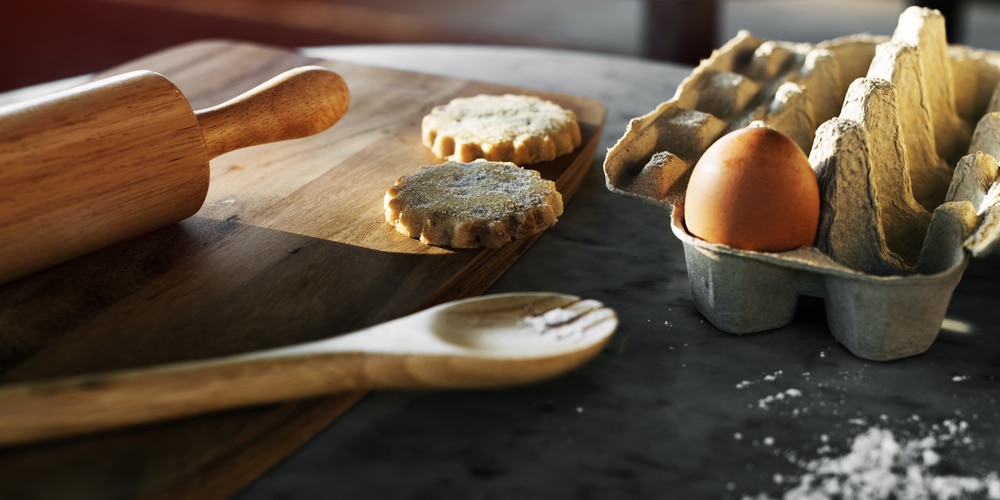
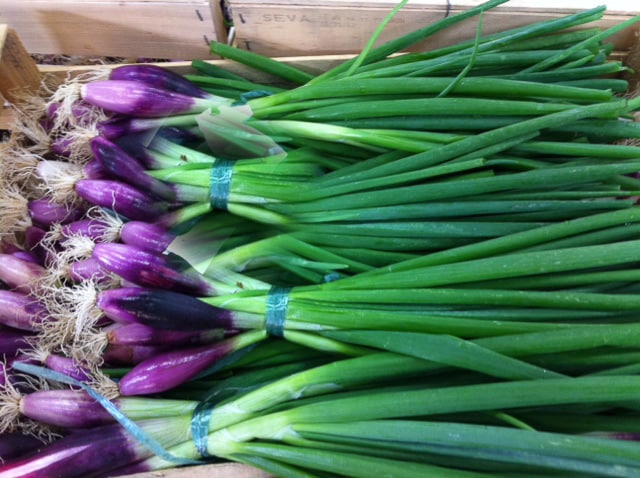
These cookies are nice with champagne or white wine as an aperitif. Alternatively, they’re great alongside soup. The best cheese for these cookies is a soft, mashable fresh goat cheese, often sold under its French name, chèvre. Chives are my first choice, but if you can’t find them, you can use the pale green parts of slender scallions or even the scallions themselves.
Recipe adapted from Dorie’s Cookies by Dorie Greenspan, Houghton Mifflin Harcourt, 2016
Ingredients
- •113 grams (1 stick; 8 tablespoons) unsalted butter, cut into chunks, at room temperature
- •85 grams (3 ounces; ⅓ cup packed) soft fresh goat cheese
- •2.5 ml (½ teaspoon) fine sea salt
- •2.5 ml (½ teaspoon) cracked or coarsely ground pepper (black or white)
- •30 ml (2 tablespoons) finely cut fresh chives or minced scallion greens or scallions
- •1 large egg, at room temperature
- •5 ml (1 teaspoon) honey
- •170 grams (1¼ cups) all-purpose flour
Preparation
Using a stand mixer with paddle attachment, or in a large bowl with a hand mixer, beat the butter, cheese, salt, pepper and chives together on medium-low speed until light and well blended, about 2 minutes. Add the egg and honey and beat for 2 minutes. Liquid will pool on the bottom of the bowl — it’s not pretty, but it’s okay. Turn off the mixer, add the flour all at once and pulse to start incorporating it. Then mix on low speed only until the flour disappears and the dough comes together. If you have some dry ingredients on the bottom of the bowl, stir them in with a flexible spatula.
Turn the dough out and press it into a disk. Place between pieces of parchment paper and roll .6 cm (¼ inch) thick. Keeping the dough between papers, slide it onto a baking sheet and freeze for at least 1 hour.
Center a rack in the oven and preheat it to 177°C (350°F). Line a baking sheet with parchment paper or a silicone baking mat. Have a 3 cm (1¼ inch) diameter cookie cutter at hand. Peel away the parchment paper from both sides of the dough and return it to one sheet. Cut out cookies and place on the lined baking sheet, leaving at least an inch between them. (If the dough gets soft as you’re cutting, stop and put it and the already cut cookies in the freezer to firm briefly.) Gather the scraps together, flatten them into a disk, re-roll and freeze.
Bake for 15 to 17 minutes, or until the cookies are browned on the bottom, lightly golden and firm to the touch on top. As the cookies bake, you’ll see butter bubbling around the tops and edges — it will settle into the cookies as they cool. Transfer the baking sheet to a rack and allow the cookies to rest for at least 5 minutes before serving, or let them cool completely.