


I’m always looking for ways to channel the renowned chef and author Yotam Ottolenghi. His recipes, rooted in his Middle Eastern upbringing, have made me much bolder in the kitchen. As an originator of unexpected yet sublime combinations of flavor, color and texture, Ottolenghi is a mythical shapeshifter who influences all that I harvest from my vegetable garden, and even more so, from the bush in which I live, not far from Victoria Falls, in Zambia.
Chief among ingredients beloved by Ottolenghi is tamarind. Imagine my surprise, then, when I found out tamarind was a tree indigenous to Africa, and specifically, in the upper Zambezi Valley where I live. I had always thought that Tamarindus indica (its etymological name) originated in Asia and was carried to Africa via caravans of Arab traders. But it appears to have been the other way around, because tamarind has been naturalized for so long on the Indian subcontinent it’s often reported as having originated there.
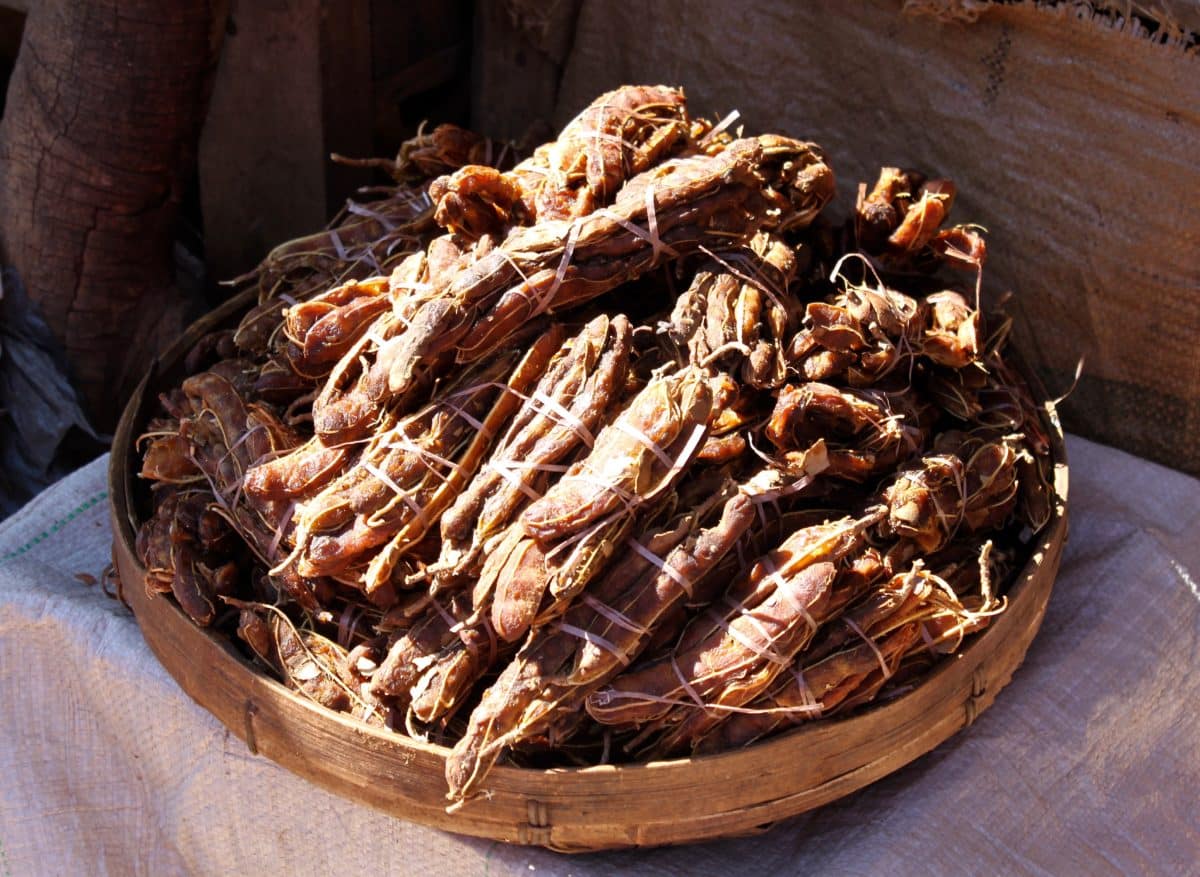
Towering wild tamarind trees thrive along the banks of the Zambezi River not far from our farm. They are called musika by the indigenous Tonga and Tokaleya people who have lived near, or under them, for millennia. Musika is foraged and consumed fresh in-season when the pulp is a balanced mix of sweet and sour. Out-of-season, it is found dried in palm-sized bundles and tied-up with string. The longer musika dries, the more sour the fruit pulp becomes. It’s available throughout the year in most of our native markets.
I was first introduced to musika by my Zambian sous chef, Adelina Banda, unaware that it was, in fact, tamarind. Not that I knew much about tamarind either, other than it was an essential ingredient in Indian cooking. Adelina told me that, traditionally, Zambians removed the sticky, russet-colored pulp encasing the seeds and mixed it with water and a little sugar, transforming it into a refreshing drink.
As with so many wild edibles, musika is also highly-prized for its medicinal value. Its long, bean-like, sandy brown pods, filled with phytochemical-rich pulp, are used here in traditional medicine for poultices to reduce fevers, abate stomach upsets or constipation, and to treat inflammation. Musika is high in tartaric acid, sugar, B vitamins, and calcium.
Three years ago, when I was gifted a small bundle of musika, I didn’t know that Mexicans made a drink called agua de tamarindo, almost identical to that made by the Zambian people. I didn’t know that musika was used as a base in many different ethnic cuisines from Asia, the Mediterranean, the Middle East, and North Africa.
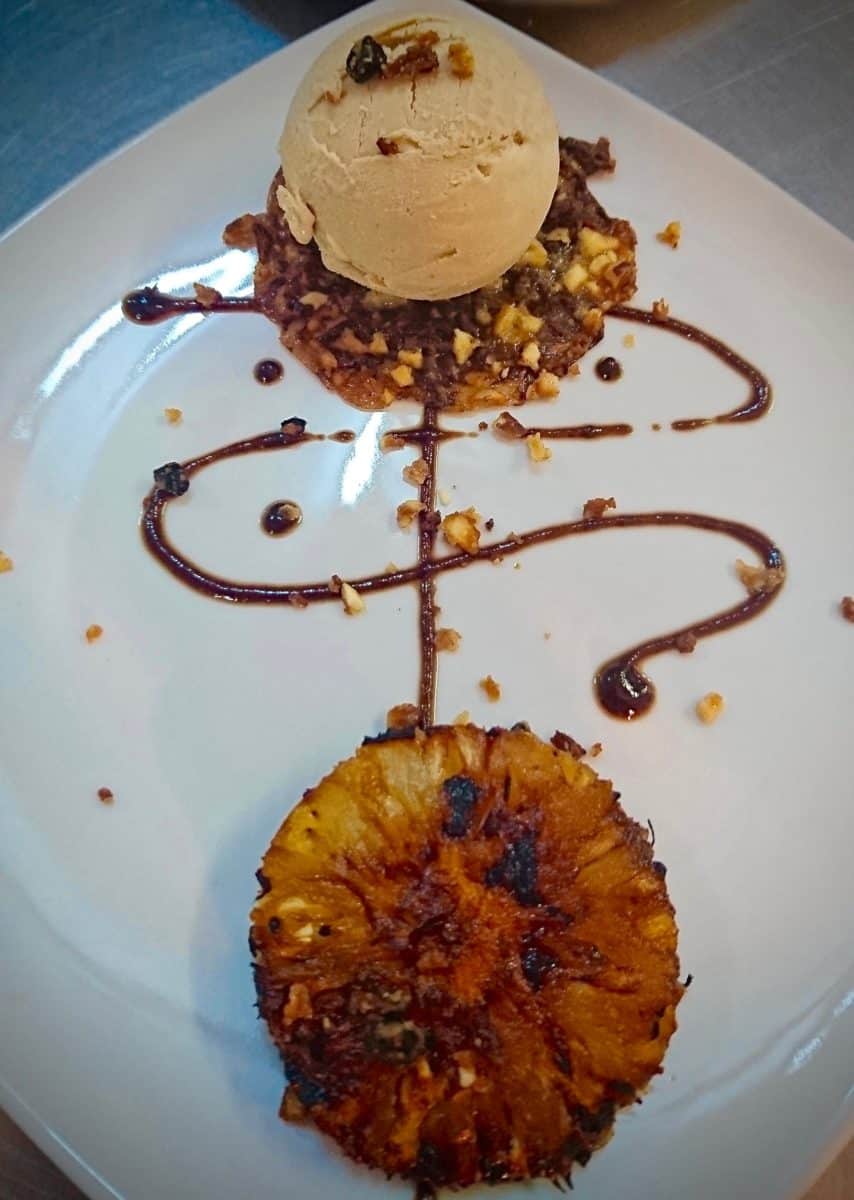
I didn’t know that its flavor presented punchy undertones to soups, preserves, glazes, tagines, and ice cream. And, mostly, I didn’t know that I was living among one of the most versatile ingredients I’ve ever come across — until I fell under the spell of Yotam Ottolenghi. Besides Adelina, I have him to thank for inspiring the recipes I’m developing with our native musika.

I turn to the following recipes I’ve developed using musika over and over again (the Musika puree recipe is used in both of the following two recipes).
Musika (Tamarind) Purée

Ingredients
- •Musika/tamarind fruit pulp
- •Warm water
- •Granulated sugar


Preparation
Place the musika/tamarind pulp into a medium bowl. Add warm water, ensuring all the fruit is well-covered, and soak for 3-4 hours, or until the pulp starts separating from the seeds and turns into a thick puree. If it becomes too thick, add a little more water.
Transfer the puree to a heavy-based saucepan and add the sugar. I use 118 ml (½ cup) sugar to every 473 ml (2 cups) tamarind puree.
Bring to the boil over a medium heat, stirring regularly until the sugar has dissolved. Once boiling, turn down the heat and simmer until the consistency of the puree becomes smoother and starts to soften, about 30 minutes.
Remove from the heat, cool, and store in sterilized preserving jars in the refrigerator. The puree will last for months.

Roasted Sweet Pepper & Musika Soup with Greek Yogurt & Edible Flowers
Ingredients
- •4-5 red peppers (about 907 grams/2 pounds), quartered and deseeded
- •907 grams (2 pounds) very ripe red tomatoes, quartered
- •2 medium red onions, roughly chopped
- •5 garlic cloves, roughly chopped
- •2 peppadews, roughly chopped
- •Large handful of Genovese or other basil leaves
- •30 ml (2 tablespoons) balsamic vinegar
- •89 ml (6 tablespoons) olive oil
- •About 59 ml (¼ cup) musika/tamarind purée, or to taste (it will depend on its strength)
- •473 ml (2 cups) chicken/vegetable stock
- •237 ml (1 cup) Greek yogurt, or to taste, plus 5 ml (1 teaspoon) per plate, for garnish
- •Salt and freshly-ground black pepper, to taste
- •Edible flowers of your choice, for garnish
Musika, or tamarind, is available in Asian or Middle Eastern grocery stores, and online. We make our own puree, the recipe of which you can find below. Remember, musika/tamarind fruit pulp is potent, so be light of hand when using it.
Preparation
Preheat oven to 204°C (400°F).
Place all the vegetables and basil in a large roasting tray. Mix together the vinegar and oil and pour it over the vegetables, making sure everything is well-coated.
Roast the vegetables in the oven, turning them over from time to time, about 45 minutes. Set aside to cool when done, about 15 minutes.
Transfer to a blender and blitz until smooth. Push through a sieve to remove any seeds or skin that remain, ensuring the end result is silky smooth.
Transfer to a heavy-based saucepan, add the musika puree, and then thin the soup with the stock to a desired consistency. Place over a medium heat, stirring regularly to ensure all the ingredients are well-combined. Remove from the heat when the soup is hot but not boiling. Whisk in the Greek yogurt, and season with salt and freshly-ground pepper.
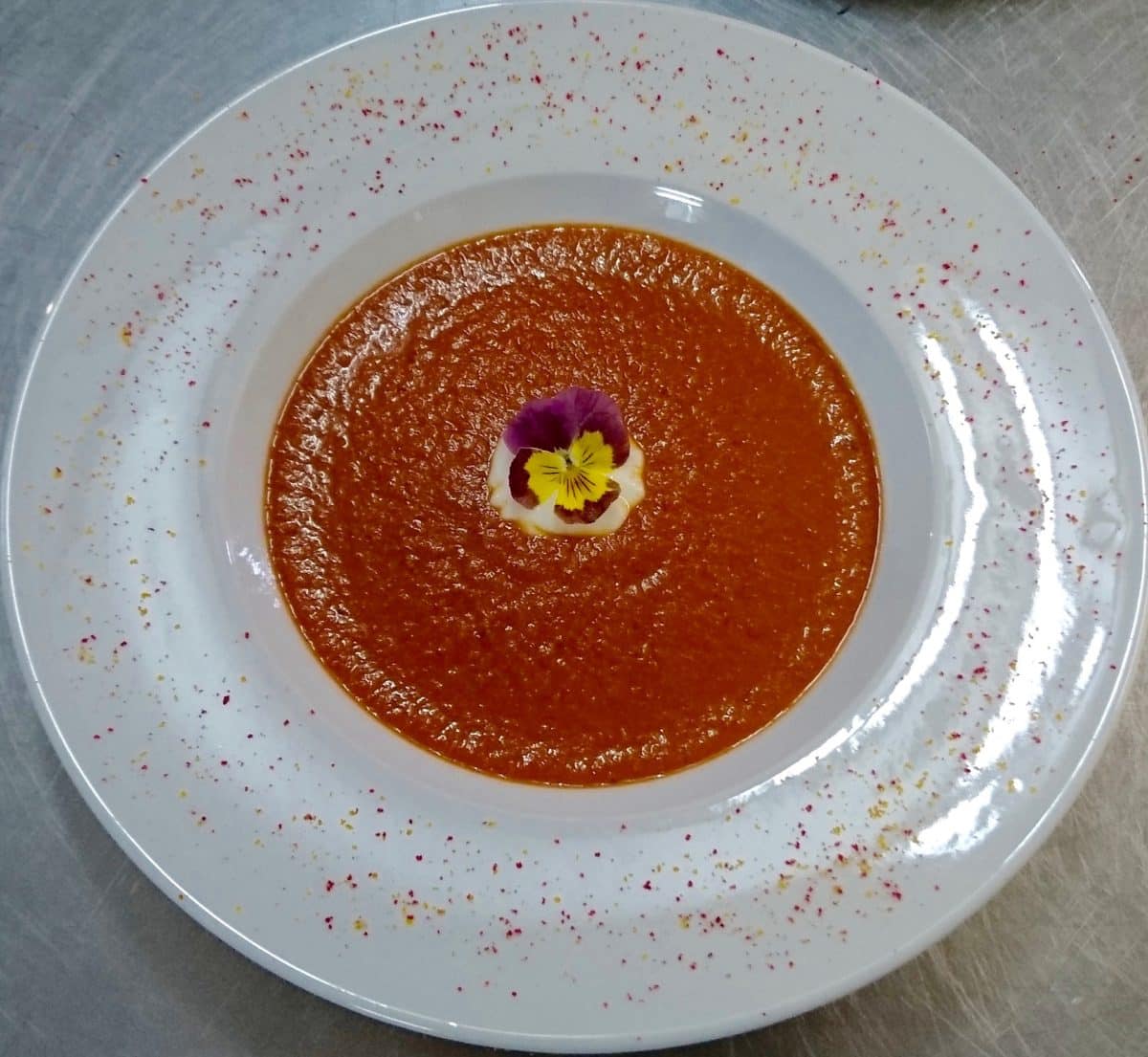
Serve warm or cold. Garnish with a teaspoon of Greek yogurt in the center of the soup, along with edible flowers arranged to your preference. If serving cold, garnish with an edible flower frozen into an ice cube, placed atop the Greek yogurt in the center of the plate.
Musika (Tamarind) Ice Cream
Ingredients
- •473 ml (2 cups) whipping cream
- •237 ml (1 cup) whole milk
- •6 egg yolks
- •118 ml (½ cup) caster (superfine) sugar
- •About 59 ml (¼ cup) musika purée, or to taste
Preparation
Put an ice cream container and a metal bowl into the freezer. Pour the cream and milk into a heavy-based saucepan and place over a medium heat. Gently bring up to the boil, stirring occasionally, and then remove from the heat. Set aside.
While the cream and milk are heating up, beat the egg yolks and sugar together in a large metal bowl until the mixture turns pale and thick. Slowly pour the hot creamy milk over the egg yolk mixture, whisking as you do so.
Place the egg yolk mixture in the metal bowl on top of a saucepan with 68 cm (2-3 inches) of boiling water over a medium heat; do not allow the boiling water does not touch the bowl.
Gently stir the custard in a figure eight, moving all around the bowl, until it thickens, 6-8 minutes. The custard should be thick enough to lightly coat the back of a wooden spoon. Remove from the heat, pour into the pre-cooled metal bowl and return to the freezer for a few minutes. Do not leave the custard in the saucepan, as the heat of the pan will continue to cook it.
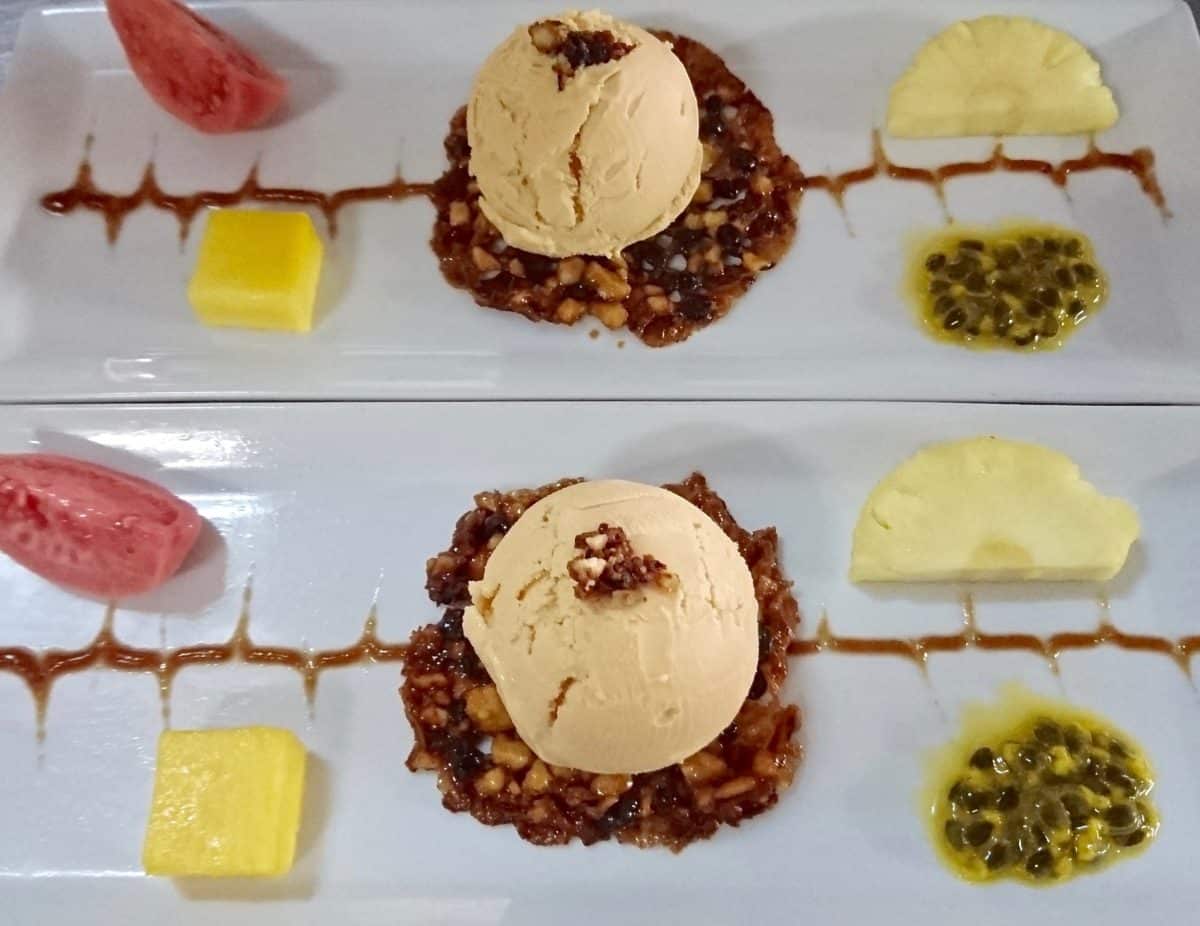
When the custard is cool whisk in the musika purée, ensuring it is very well-combined. Pour into an ice cream maker and after the cycle is complete, transfer into the pre-cooled ice cream container and store in the freezer until ready to serve.
