





SKILL LEVEL: BEGINNER
How to List Recipe Ingredients Professionally for Publication
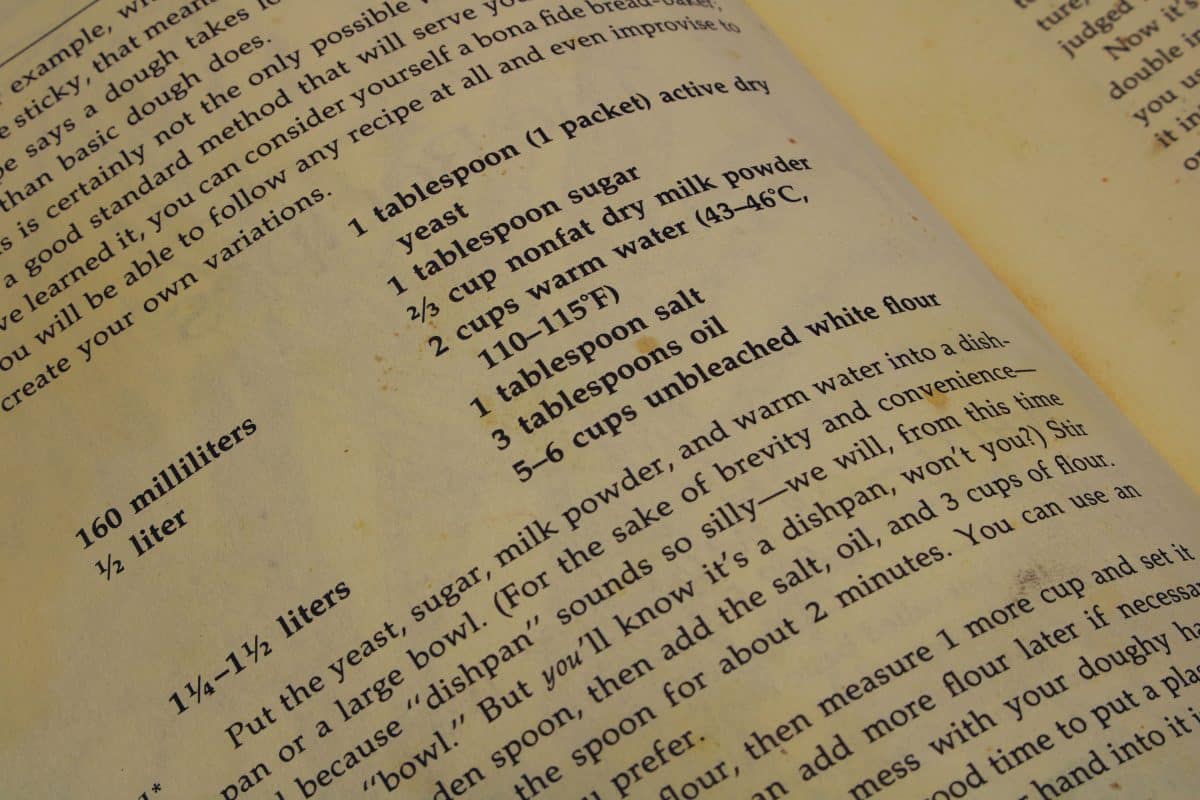
Recipes can be presented in many different styles, but one requirement of an ingredients list is that the ingredients should be listed in the order they are used.
After that, amounts should be given largest to smallest.
Most cooks have at least a few beloved hand-written recipes that have been passed along to us on index cards or slips of paper, or that may have been only verbal instructions given by a grandmother or friend that we later jotted down. We don’t notice or criticize the style in which they are written, or care if they are stained or torn or if we have to puzzle out the directions or the meaning of the words oleo* or manteca.**
But we have a different standard for recipes that are presented publicly. We expect them to be accurate, written in language that we can understand, the steps (whether numbered or not) presented in an orderly way.
Styles of recipes vary. They may be written casually or formally, with humor or in all seriousness. They may have accompanying headnotes, footnotes, sidebars, photos, and/or diagrams. But one universal rule applies to the correct editing of all recipes everywhere:
In the list of ingredients, present the ingredients in the order in which they are used.
To do otherwise is sloppy – and, from a professional standpoint, unacceptable. Listing ingredients in the order used allows the busy cook to follow the recipe in a progression from top to bottom. It’s efficient and makes perfect sense.
Some writers of recipes have the urge to put the centerpiece of the recipe – the beef tenderloin, the whole goose – at the top of the list of ingredients. There’s a nice way to address this, which is simply to use that item first.
“Season the beef with salt and pepper…” “Rinse the goose and remove any excess fat…”
If it doesn’t matter in which order ingredients are added (for example, if they will be combined in one bowl at the same time), group them by type of ingredient (in the example below: dairy, sugars and spices) and then by amount, largest to smallest:
2 cups heavy cream
1/2 cup crème fraiche
1/4 cup confectioner’s sugar
2 tablespoons dark brown sugar
1 teaspoon ground cinnamon
1/4 teaspoon ground cardamom
Pinch of freshly grated nutmeg
Our instructions would read:
In a large bowl, combine the cream, crème fraiche, confectioners’ sugar, brown sugar, cinnamon, cardamom, and nutmeg…
What if we wanted to add 1/2 teaspoon of vanilla extract to the list above? In that case, it might be best to mix the cream and vanilla together in the bowl before adding the remaining ingredients.
2 cups heavy cream
1/2 teaspoon vanilla extract
1/2 cup crème fraiche
1/4 cup confectioner’s sugar
2 tablespoons dark brown sugar
1 teaspoon ground cinnamon
1/4 teaspoon ground cardamom
Pinch of freshly grated nutmeg
And the instructions would change accordingly:
In a large bowl, mix together the cream and vanilla. Add the crème fraiche, confectioners’ sugar, brown sugar, cinnamon, cardamom, and nutmeg…
There are many ways in which to present a recipe, and each author, editor and publisher of that recipe will have a preferred (and not always the same) style. But one fixed and invariable rule of professional recipe editing is that all ingredients must be listed, always, in the order that they are used.
* An outdated term for “oleo margarine,” a butter substitute made from vegetable oil.
** Spanish word for lard.
List Ingredients in the Order in Which They are Used and in Amounts from Large to Small