



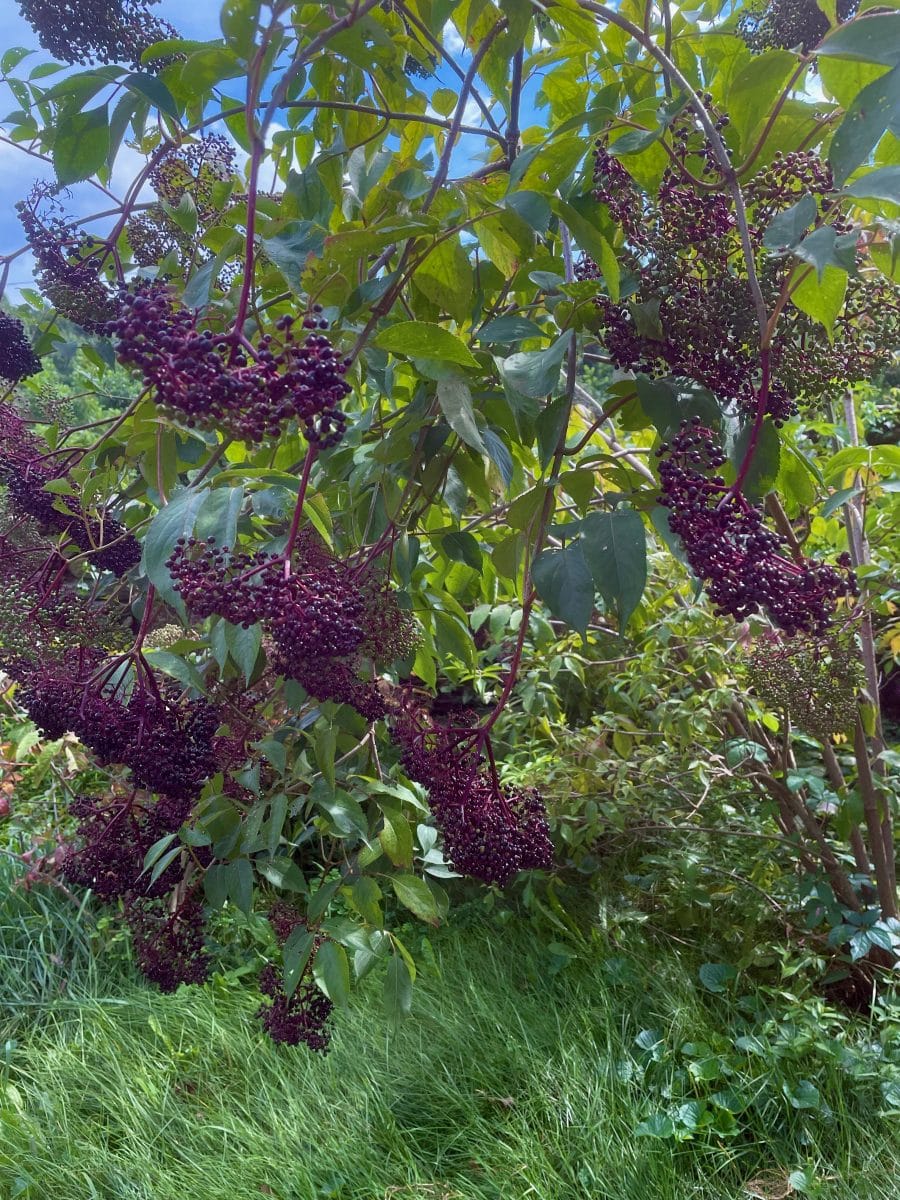


Elderberries are hardy plants that require no special care, offering a generous harvest.
How asparagus unknowingly lead me to experiment with elderberries.
Embarking on a new adventure is always exciting, especially when it involves learning to garden. I’m embarrassed to admit that elderberries were completely unknown to this transplanted city girl. A neighbor’s generous gesture of homemade elderberry syrup in exchange for my extra asparagus plants marked the beginning of awareness of elderberries and elderberry lore.
A short while after, another neighbor planted three elderberry shrubs on our farm as a thank you for letting her propagate butterflies on our trees. The following season, those bushes grew taller and bore fruit. I realized to my great surprise that we already had large elderberry trees laden with berries at the side of our barn. Elderberries are hardy plants that require no special care, offering a generous harvest.
Although elderberries were uncharted territory for me, they are increasingly popular for their potential health benefits. Now, my kitchen is adorned with vibrant purple stains as I dive into the process of experimenting with elderberry delights. And, thanks to a good deal of internet research, I discovered just in time that eating raw elderberries was verboten and toxic.
The first years I made jam, and syrup and canned several batches, trying different recipes. This past summer I promised myself to go easy on the processing. I made two batches of syrup with eight cups of berries in each. I froze two more half gallons of the raw fruit for playing with later. I skipped the canning.
While I don’t claim ANY health benefits, I’ve found joy in creating elderberry syrup variations – from honeyed and sugared varieties to syrup with vodka for cocktails. Whether you’re seeking natural remedies or simply enjoying the taste, elderberry syrup offers endless possibilities.
Elderberry Syrup
This elderberry tonic recipe does not produce a thick viscous, overly sweet ‘syrup’. It is very adaptable, and more or less sweetener, citrus and herbs can be added according to personal preference. Elderberry is thought to help boost the immune system. Tonic, writes Google’s Oxford Languages Dictionary, is a medicinal substance taken to give a feeling of vigor or well-being. According to Merriam-Webster, a tonic increases or restores physical or mental tone and is REFRESHING.
Is this a syrup or tonic?
The answer lies in the ever-evolving culinary landscape that continually challenges and stretches traditional definitions. Culinary innovations often blur the boundaries between established categories, creating delightful new options.
This less-viscous elderberry “syrup” draws from both worlds. It offers the flavorful allure commonly associated with syrups, yet its sugar content and medicinal properties make it resonate more closely with a tonic. The term “syrup” is in quotes to pay homage to the traditional usage of the term, but with the understanding that this preparation straddles the line between a syrup and a tonic. Whatever you call it, the deep purple liquid adds an interesting color and flavor to drinks and desserts.
Ingredients
- •8 cups fresh elderberries (or 4 dried)
- •8 cups water
- •1-2 inch piece of fresh ginger
- •1 orange and peel of an orange
- •3 sticks cinnamon
- •1 vanilla bean (optional)
- •6 pods cardamom
- •6 cloves


Preparation
Wash elderberries thoroughly (avoid eating any raw berries).
Remove as much of the unripe berries and twigs as possible.
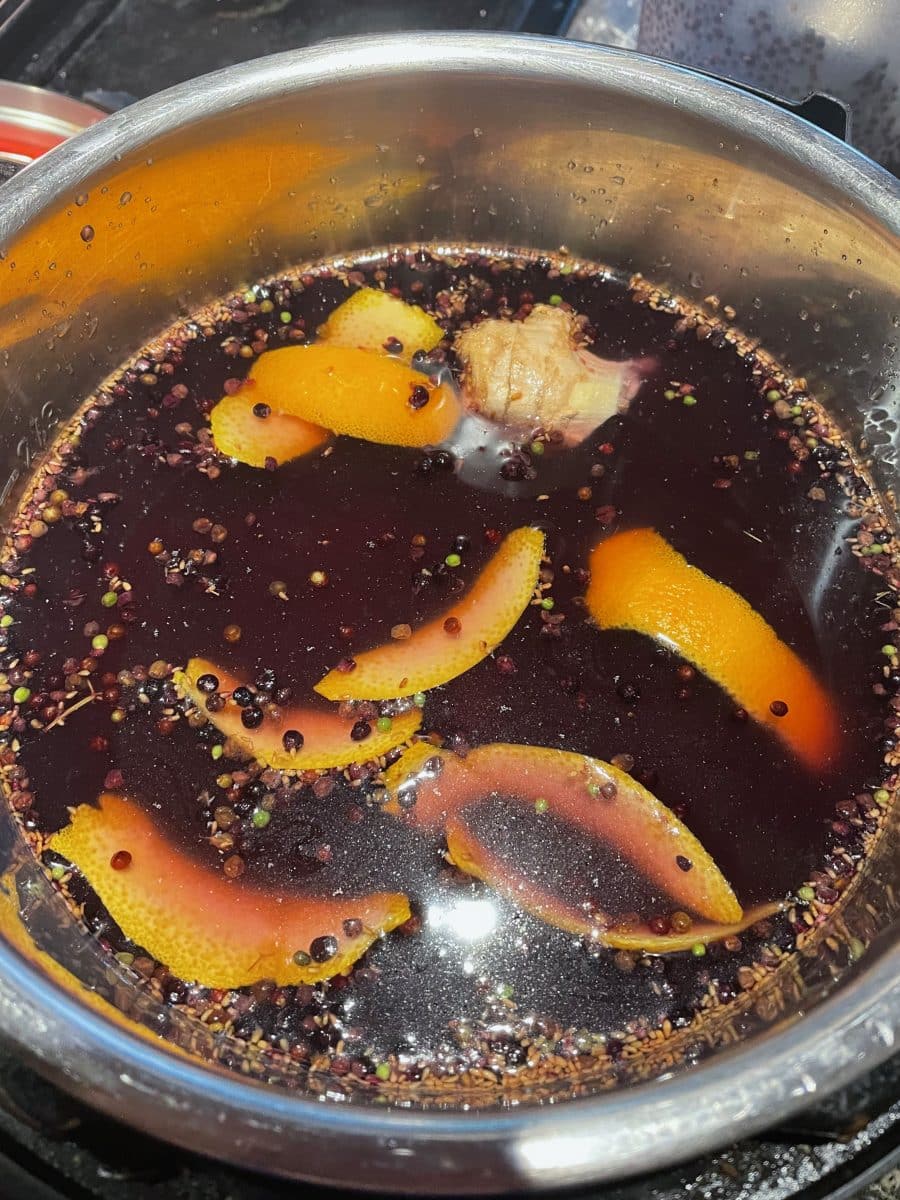
Simmer berries and water and desired herbs in a 1:1 ratio for 40 minutes, slow cook for 2 hours, or pressure cook for 7 minutes.
Strain solids into a cheesecloth bag or layer cheesecloth over a bowl. Once cool enough, squeeze excess liquid from berries into the syrup.
If desired, add honey once the liquid has cooled to just above room temperature (do not add while hot).
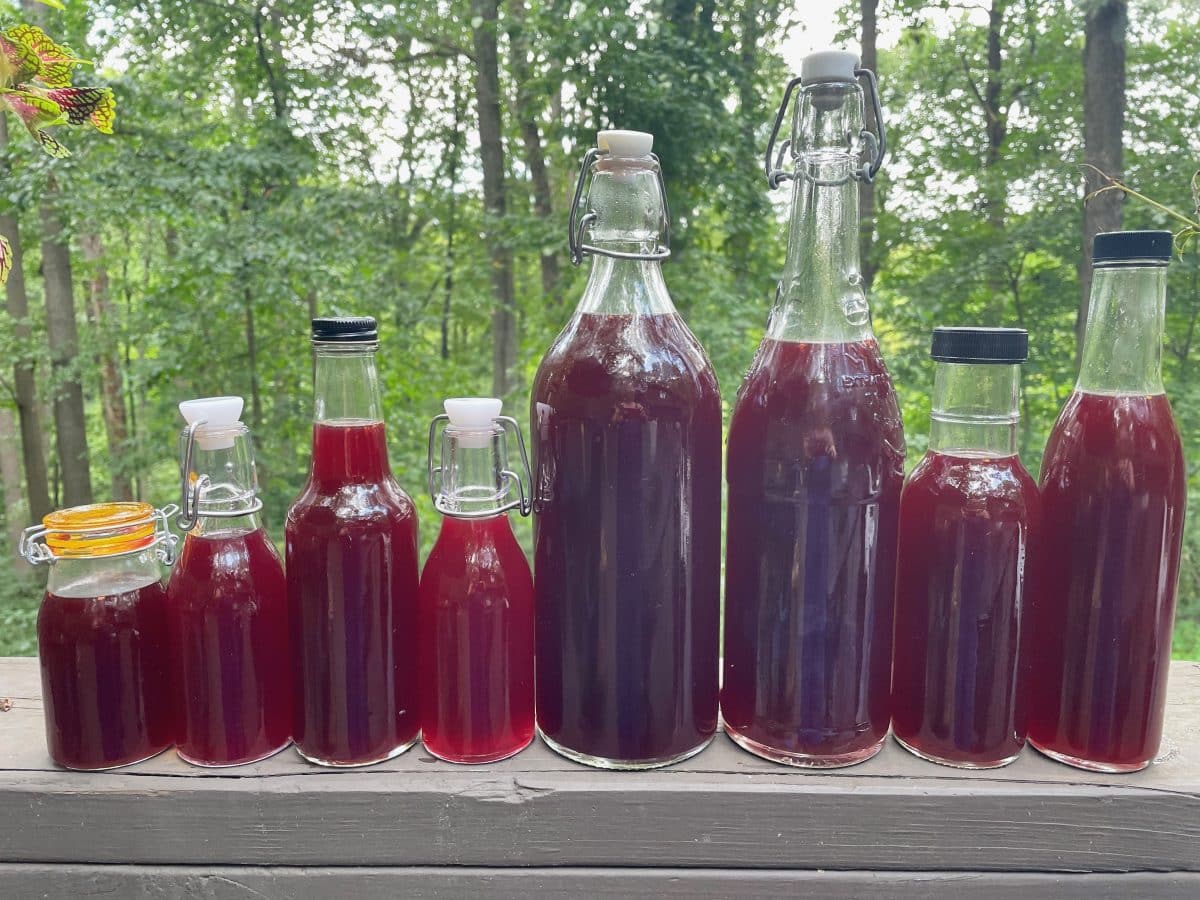
Siphon the syrup into glass bottles when cooled completely.
